
Centre proposes Article 371K for Ladakh
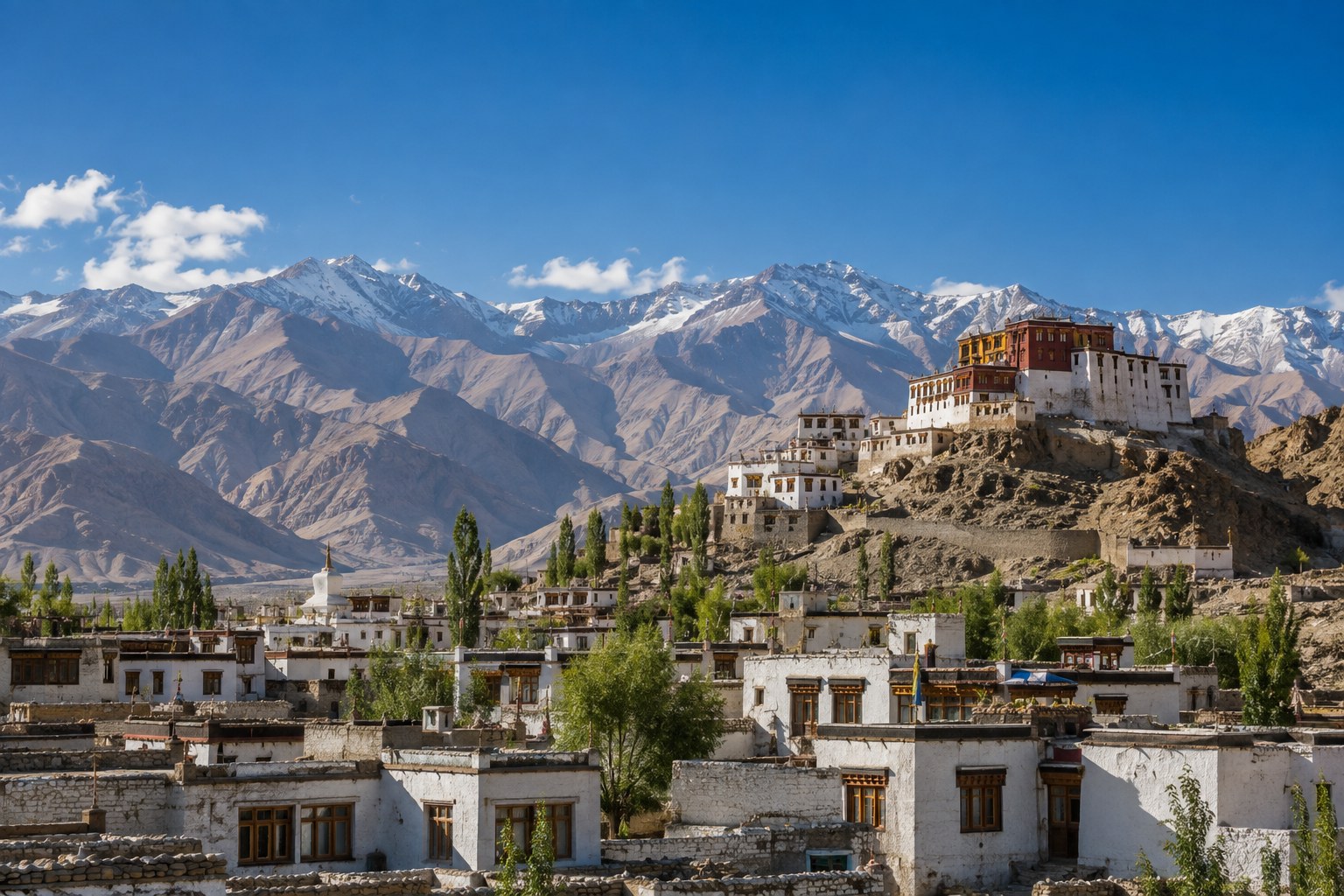
The Union government has proposed a new Article 371K giving Ladakh special constitutional safeguards, after an in-principle understanding with the Leh Apex Body and the Kargil Democratic Alliance. It would create a directly elected Union Territory-level body with powers over land, culture and language, forests and natural resources.
Syllabus: GS2 · Constitution; GS2 · Federalism & Local Government; Prelims · Polity & Governance
Why it matters
A resident of Leh or Kargil has no elected legislature for the Union Territory today: the President runs it through a Lieutenant Governor, and local groups want a larger say in decisions on land and infrastructure projects. The proposal would let representatives chosen by direct election make laws on land, culture and language, forests and natural resources. Much was still open in early October 2026: no draft had been shared, control over the police and the bureaucracy was unsettled, and powers had yet to be divided between the new body and the existing hill councils. The change also needs a constitutional amendment passed by a special majority in each House of Parliament, so the new body can come into being only after Parliament passes it.
Prelims pointers
- Articles 371 to 371J: Part XXI of the Constitution, titled Temporary, Transitional and Special Provisions; Article 371E lets Parliament by law establish a Central University in Andhra Pradesh.
- 371A Nagaland, 371B Assam, 371C Manipur, 371D Andhra Pradesh and Telangana, 371F Sikkim, 371G Mizoram, 371H Arunachal Pradesh, 371-I Goa, 371J Karnataka; Article 371 itself covers Maharashtra and Gujarat.
- Articles 371A and 371G: no Act of Parliament on customary law or ownership and transfer of land applies to Nagaland or Mizoram unless the State Assembly so resolves.
- Article 240: the President may make regulations for the peace, progress and good government of certain Union Territories; section 58 of the 2019 Act applies this to Ladakh.
- Sixth Schedule, under Article 244(2): administration of tribal areas in Assam, Meghalaya, Tripura and Mizoram as autonomous districts, each with a District Council.
- Article 368: a constitutional amendment Bill needs, in each House, a majority of total membership and two-thirds of members present and voting.
- Article 239A: Parliament may by law create a Legislature, a Council of Ministers, or both, for the Union Territory of Puducherry.
- Article 371B came with the Twenty-second Amendment, 1969; Article 371-I fixes the Goa Legislative Assembly at not less than 30 members.
Practise a UPSC-style question
Consider the following pairs:
(Provision : State it concerns)
1. Article 371A : Nagaland
2. Article 371C : Assam
3. Article 371G : Mizoram
4. Article 371H : Sikkim
How many of the above pairs are correctly matched?
- (a) Only one
- (b) Only two
- (c) Only three
- (d) All four
Show the answer
Answer: (b) Only two
1 is correctly matched: Article 371A concerns Nagaland. 2 is not: Article 371C concerns Manipur; Assam's provision is Article 371B. 3 is correctly matched: Article 371G concerns Mizoram. 4 is not: Article 371H concerns Arunachal Pradesh; Sikkim's provision is Article 371F.
More from the 18 September 2026 edition
- US Bill threatens up to 100% tariffs on buyers of Russian oil World & IR
- UPI gets a 0.4% merchant fee above ₹2,000 Economy
- Report: a fifth of India's GDP rests on the Himalayas Environment
- Shaksgam Valley and the 1963 pact: India rejects China-Pakistan boundary commission World & IR
- EPFO wage ceiling raised to ₹25,000 after 12 years Economy