
Centre asks Speaker and Chairman to reconvene unprorogued Monsoon Session
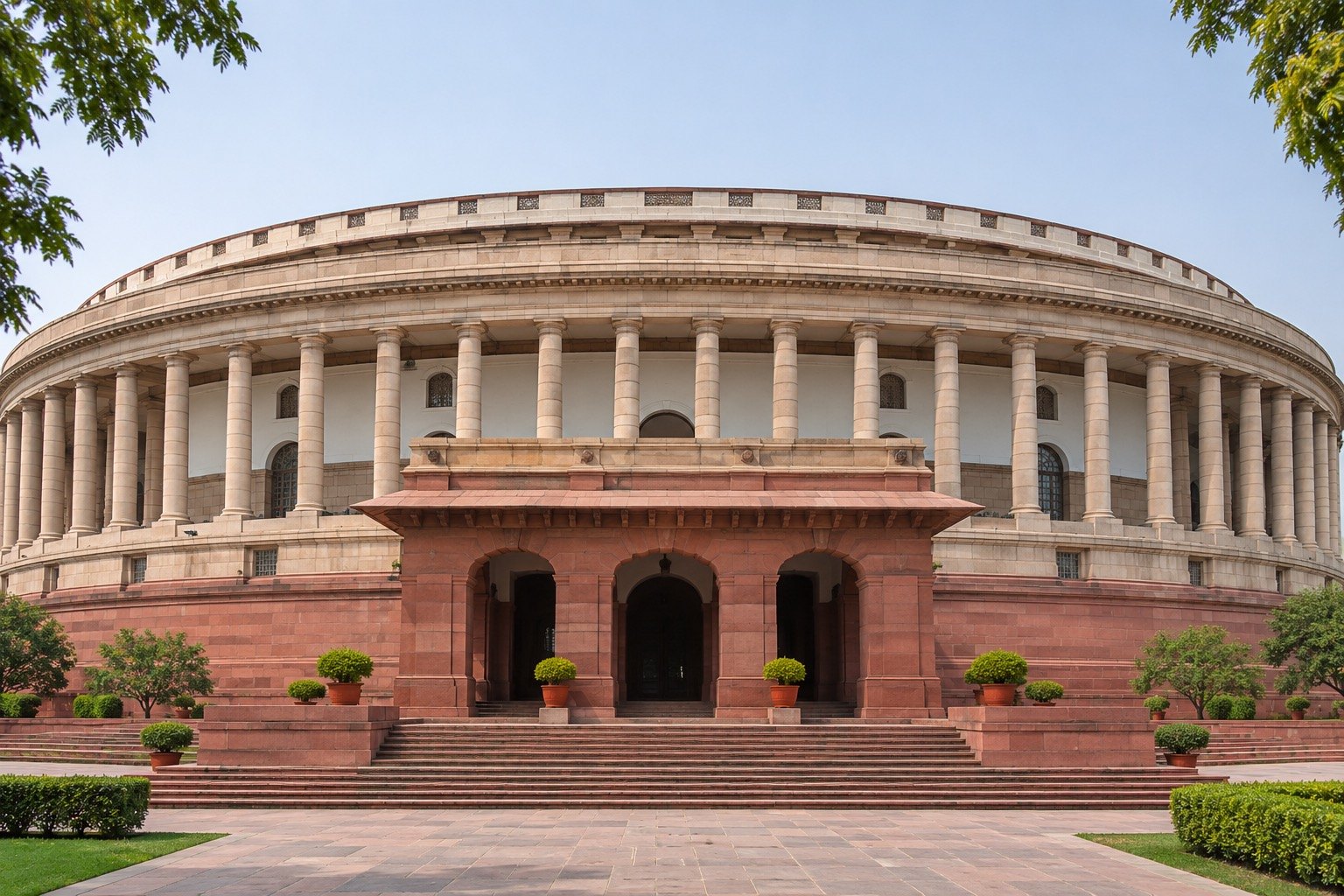
The Union government on 26 November 2026 asked the Lok Sabha Speaker and Rajya Sabha Chairman to recall Parliament. It cited essential government business. The Lok Sabha is to sit from 30 November and the Rajya Sabha from 2 December. Both may rise on 3 December. The Monsoon Session, adjourned sine die on 13 August, was never prorogued.
Syllabus: GS2 · Constitution; Prelims · Polity & Governance; GS2 · Parliament & State Legislatures
Why this matters for UPSC
GS2 polity: sessions of Parliament, adjournment sine die and prorogation under Article 85. Prelims can ask who prorogues and who recalls; Mains, who controls Parliament's calendar.
Why it matters
An MP who went home after the August adjournment is being called back to the same session, not to a new one. Because the session was never closed, the government did not need the President to summon Parliament afresh; it only had to ask the two presiding officers. That lets a government bring business before the Houses at short notice. For women waiting for reserved seats in Parliament and the Assemblies, the sitting matters because their quota cannot start until delimitation is done, and the package that would move it needs a special majority. The wider question is who decides when Parliament meets: an open session leaves the timing with the government of the day.
Prelims pointers
- Article 85(1) makes the President summon each House and bars a gap of six months between the last sitting of one session and the first sitting of the next.
- Adjournment, including adjournment sine die, is decided by the presiding officer; prorogation of either House and dissolution of the Lok Sabha are the President's powers under Article 85(2).
- Article 107(3): a Bill pending in Parliament does not lapse on prorogation; Article 108 shows that dissolution of the Lok Sabha can make a Bill lapse.
- Article 368(2) requires a special majority in each House for an amendment; Article 100(1) settles ordinary questions by a majority of members present and voting.
- Article 108 lets the President call a joint sitting of both Houses to resolve a deadlock on a Bill, but not on a Money Bill.
- Article 100(3) puts the quorum of either House at one-tenth of its total membership until Parliament provides otherwise by law.
- Article 330A reserves one-third of directly elected Lok Sabha seats for women, including a third of SC and ST seats; Article 332A does the same for State Assemblies.
- Under Article 334A, women's reserved seats rotate after each later delimitation, as Parliament decides by law.
Practise a UPSC-style question
With reference to the sessions of Parliament, consider the following statements:
1. The Speaker of the Lok Sabha prorogues the House at the close of a session.
2. Under the Lok Sabha's procedure rules, the Speaker may call a sitting even after the House stands adjourned sine die.
3. A Bill pending in Parliament does not lapse merely because the Houses are prorogued.
Which of the statements given above is/are correct?
- (a) 1 and 2 only
- (b) 2 and 3 only
- (c) 1 and 3 only
- (d) 1, 2 and 3
Show the answer
Answer: (b) 2 and 3 only
Answer: (b) 2 and 3 only. The Speaker adjourns and may recall the House; prorogation belongs to the President.
Statement 1: incorrect. Article 85(2)(a) of the Constitution gives the power to prorogue the Houses, or either House, to the President.
Statement 2: correct. The Lok Sabha's Rules of Procedure let the Speaker, if the Speaker thinks fit, call a sitting at any time after an adjournment sine die.
Statement 3: correct. Article 107(3) says a Bill pending in Parliament shall not lapse by reason of the prorogation of the Houses.
Eliminate: Be sure of statement 1 first: prorogation is the President's act under Article 85, not the Speaker's. Out: (a), (c), (d).
Trap: Swapped attribution. Adjournment sine die and prorogation both end sittings, so the question pins the President's power on the presiding officer.
Remember: Presiding officer adjourns and recalls; the President summons and prorogues.
More from the 28 November 2026 edition
- RBI lowers daily cash reserve ratio floor to 90% from December Economy
- NBA splits AYUSH Access and Benefit Sharing money by forest cover Environment
- Cabinet approves Constitution Amendment Bill on delimitation and women's reservation Polity
- India, as IORA Chair, hosts ministerial meeting in New Delhi World & IR
- NAVYA 2.0: MWCD-MSDE girls' skilling scheme to cover 100 districts National
- UNCTAD Review of Maritime Transport forecasts flat trade; Indian ports gain Economy
- PMLA Adjudicating Authority Bench must include a judicial member: Supreme Court Polity
- Agriculture Ministry's final estimates: 2025-26 foodgrain at record 3785.38 lakh tonnes Economy