
Cabinet approves Constitution Amendment Bill on delimitation and women's reservation
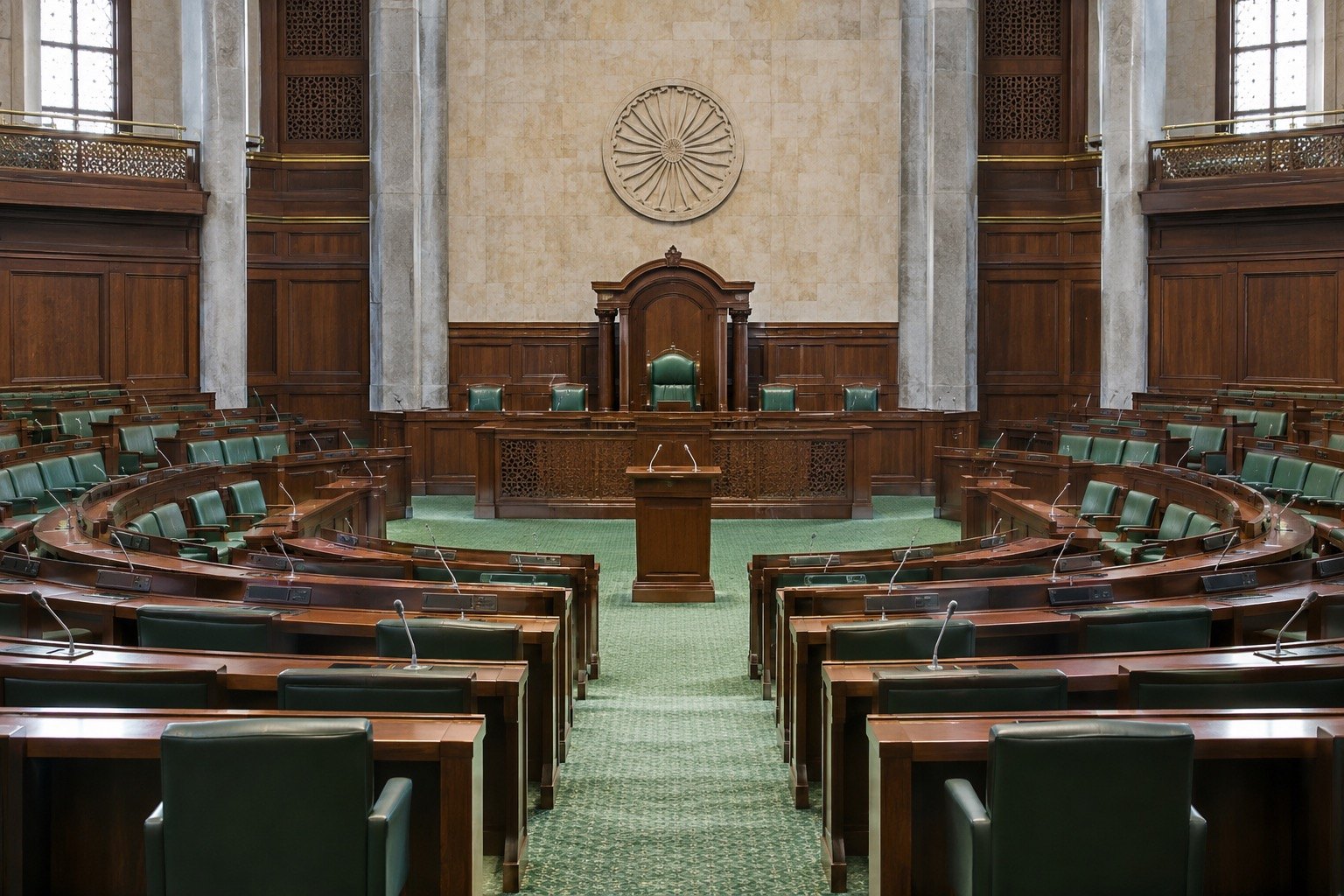
The Union Cabinet on 27 November 2026 approved a Constitution Amendment Bill on delimitation and reservation for women. As reported, it raises Lok Sabha seats in every State by 50%, leaving each State's relative share unchanged until 2051. The Lok Sabha meets from 30 November, the Rajya Sabha from 2 December.
Syllabus: GS2 · Constitution; GS2 · Federalism & Local Government; Prelims · Polity & Governance
Why this matters for UPSC
GS2 polity: the delimitation freeze in Articles 82 and 170, and the 106th Amendment. Prelims can ask the census bases and Article 368's special majority; Mains, delimitation and federalism.
Why it matters
A voter in any State would, as reported, see her State's Lok Sabha seats grow by half while its weight against other States stays where it was. Seat shares redrawn on a newer census would give more say to States whose population grew faster and less to those where it grew slowly; sealing the old ratio avoids that shift for another generation. The same Bill decides when a woman can contest a seat reserved for women, because the 2023 quota cannot start until a delimitation happens. If the Bill fails again, the quota keeps waiting, and the freeze lapses by itself once post-2026 census figures are out.
Prelims pointers
- Article 81 caps the Lok Sabha at 530 members chosen from the States and 20 representing the Union Territories.
- Article 81's proviso uses the 1971 census for sharing seats among States and the 2001 census for constituencies within a State, until post-2026 census figures appear.
- Under Article 82, Parliament by law fixes the authority and manner of readjustment; the President, by order, fixes the date it takes effect.
- Article 170 sets a State Legislative Assembly at not more than 500 and not less than 60 directly elected members.
- Articles 330A and 332A reserve one-third of directly elected seats for women, with SC and ST women's seats counted inside that third.
- Article 334A ends the quota fifteen years after the 106th Amendment's commencement, but seats continue till a date Parliament fixes by law; rotation also follows Parliament's law.
- Article 368(3) says nothing in Article 13 applies to an amendment made under Article 368.
Practise a UPSC-style question
With reference to the amendment of the Constitution under Article 368, consider the following statements:
1. A Bill to amend the Constitution must first be introduced in the Lok Sabha.
2. Each House must pass it by a majority of its total membership and two-thirds of members present and voting.
3. The President may return a Constitution Amendment Bill to Parliament for reconsideration.
Which of the statements given above is/are correct?
- (a) 1 only
- (b) 2 only
- (c) 3 only
- (d) 1, 2 and 3
Show the answer
Answer: (b) 2 only
Answer: (b) 2 only. Article 368(2) lets either House take up the Bill and obliges the President to assent.
Statement 1: incorrect. Article 368(2) says an amendment may be initiated by introducing a Bill in either House of Parliament.
Statement 2: correct. Article 368(2) asks for a majority of the total membership of each House plus two-thirds of those present and voting.
Statement 3: incorrect. Once both Houses pass the Bill, Article 368(2) says the President shall give assent; there is no return for reconsideration.
Eliminate: Statement 2 is the special majority itself, so it is correct. Out: (a), (c).
Eliminate: Statement 3 is wrong, since the assent is obligatory. Out: (d).
Trap: Sounds right. The power to return an ordinary Bill is borrowed for an amendment Bill, where the Constitution makes assent obligatory.
Remember: Either House, special majority in each, then assent the President cannot withhold.
More from the 28 November 2026 edition
- RBI lowers daily cash reserve ratio floor to 90% from December Economy
- NBA splits AYUSH Access and Benefit Sharing money by forest cover Environment
- India, as IORA Chair, hosts ministerial meeting in New Delhi World & IR
- NAVYA 2.0: MWCD-MSDE girls' skilling scheme to cover 100 districts National
- Centre asks Speaker and Chairman to reconvene unprorogued Monsoon Session Polity
- UNCTAD Review of Maritime Transport forecasts flat trade; Indian ports gain Economy
- PMLA Adjudicating Authority Bench must include a judicial member: Supreme Court Polity
- Agriculture Ministry's final estimates: 2025-26 foodgrain at record 3785.38 lakh tonnes Economy