
RBI keeps SBI, HDFC Bank, ICICI Bank as domestic systemically important banks
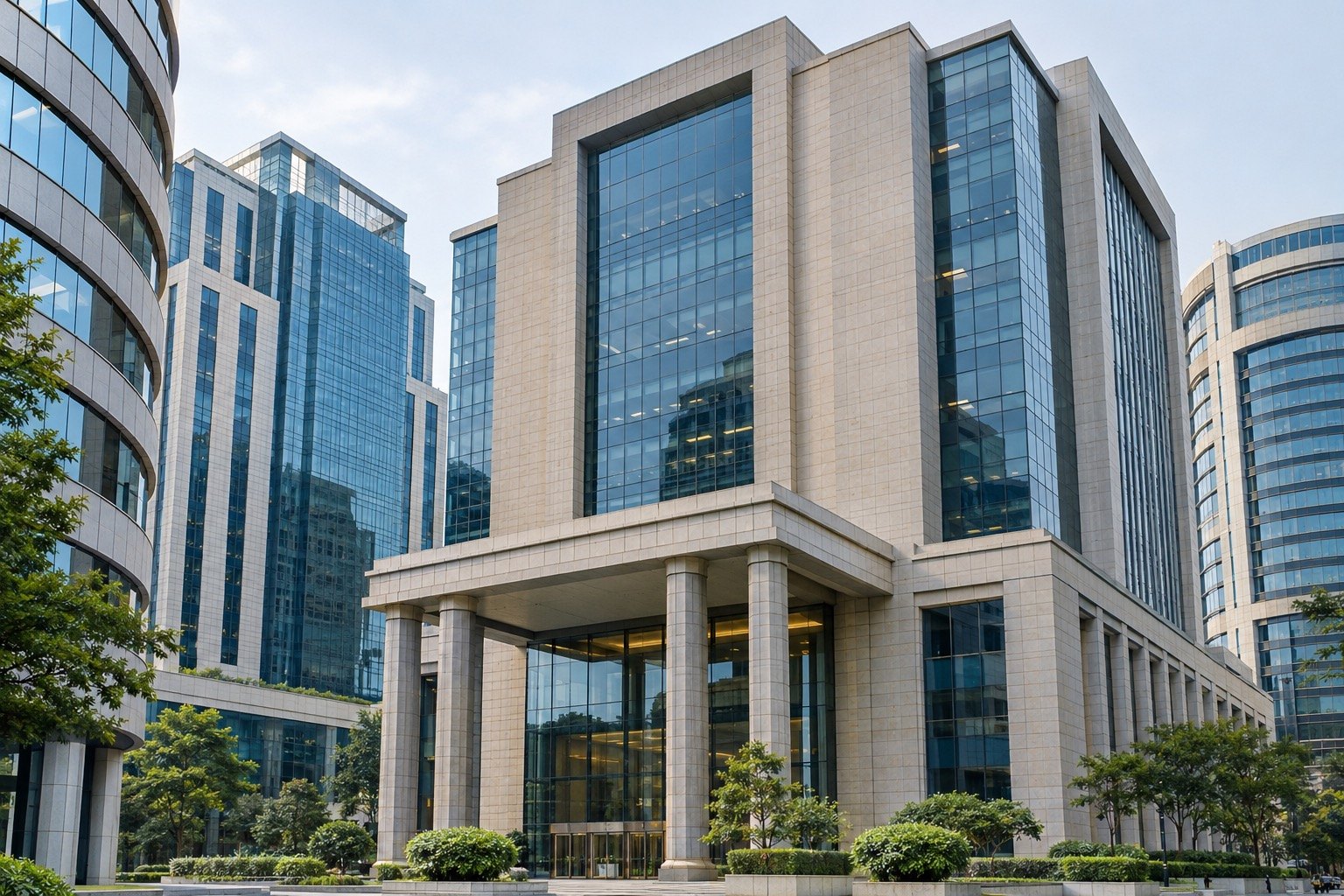
On 23 November 2026, the Reserve Bank of India (RBI) named its Domestic Systemically Important Banks (D-SIBs) for 2026. State Bank of India (SBI) stays, with HDFC Bank and ICICI Bank, each in its 2025 bucket. Each must hold extra Common Equity Tier 1 (CET1) capital: SBI 0.80% of risk-weighted assets, HDFC Bank 0.40%, ICICI Bank 0.20%.
Syllabus: GS3 · Indian Economy & Growth; Prelims · Current Affairs & IR; GS2 · International Institutions
Why this matters for UPSC
GS3 economy: banking regulation and the Basel norms on systemically important banks. Prelims can ask D-SIB indicators, buckets and the G-SIB contrast; Mains, the too big to fail problem.
Why it matters
A shopkeeper who keeps her savings with SBI and borrows from it depends on services that would be hard to replace quickly if a bank of that size failed. Because the collapse of so large a bank could spread through the banking system into the wider economy, the RBI makes these three lenders keep a thicker cushion of their best-quality capital than other banks. That cushion absorbs losses as they arise, so a shock is less likely to turn into a disorderly failure. The empty top bucket tells the biggest banks that growing more systemic will cost them more.
Prelims pointers
- G-SIBs are scored under the BCBS method on five indicators, cross-jurisdictional activity among them; D-SIBs are scored by national authorities, and the RBI drops that indicator.
- The BCBS's G-SIB method weights its indicators equally, with a cap on substitutability; the RBI gives size 40% as the strongest sign of systemic importance.
- A wholly owned subsidiary in India of a foreign G-SIB counts as a domestic bank: it pays no G-SIB surcharge here, but pays a D-SIB one if designated.
- A foreign bank branch that is both a G-SIB and an Indian D-SIB holds the higher of the two surcharges, not their sum.
- A domestic bank's systemic importance is scored on its global consolidated balance sheet, under the rules of regulatory consolidation.
- The FSB's October 2010 paper suggested liquidity surcharges and tighter large exposure limits for systemically important banks; the RBI tied these to agreement at the BCBS.
Practise a UPSC-style question
With reference to the Reserve Bank of India's framework for Domestic Systemically Important Banks (D-SIBs), as first issued in 2014, consider the following statements:
1. Banks whose size exceeds 2% of GDP are selected for the assessment of systemic importance.
2. A D-SIB placed in a lower bucket attracts a higher additional capital charge.
3. Besides the indicator scores, the final call on naming a bank a D-SIB also rests on supervisory judgement.
Which of the statements given above is/are correct?
- (a) 1 and 2 only
- (b) 2 and 3 only
- (c) 1 and 3 only
- (d) 1, 2 and 3
Show the answer
Answer: (c) 1 and 3 only
Answer: (c) 1 and 3 only. The sample rests on size against GDP and judgement shapes the final call; the grading of buckets runs the other way.
Statement 1: correct. Under the RBI's 2014 framework, banks with a size beyond 2% of GDP enter the sample, and a few large foreign banks are added.
Statement 2: incorrect. The surcharge rises with the bucket: a higher bucket carries a higher CET1 charge, from 0.20% of RWAs in bucket 1 to 1% in bucket 5.
Statement 3: correct. The 2014 framework treats the indicator scores as a general structure, not a precise tool, and adds qualitative supervisory judgement to the final designation.
Eliminate: statement 2 reverses the grading, so every option with 2 goes. Out: (a), (b), (d).
Trap: Reversed direction. Statement 2 keeps the right tool, graded buckets, but turns its direction, pairing a lower bucket with a higher charge.
Remember: Higher score, higher bucket, higher CET1 surcharge; the top bucket starts empty.
More from the 24 November 2026 edition
- Coal Ministry guidelines make mine closure integral to every mining plan Environment
- RBI draft proposes trusted-person approval and stop switch against banking fraud Economy
- India's first dedicated human metabolic chamber opens at CMC Vellore Sci-Tech
- COP31 at Antalya ends without a cover decision over fossil fuels Environment
- ICMR's SAMPADA survey, using venous blood, finds lower anaemia estimates National
- India's landslide susceptibility map covers 4.3 lakh sq km Environment
- India, Nepal adopt Joint Vision; India announces Rs 15,000 crore package World & IR