
RBI draft proposes trusted-person approval and stop switch against banking fraud
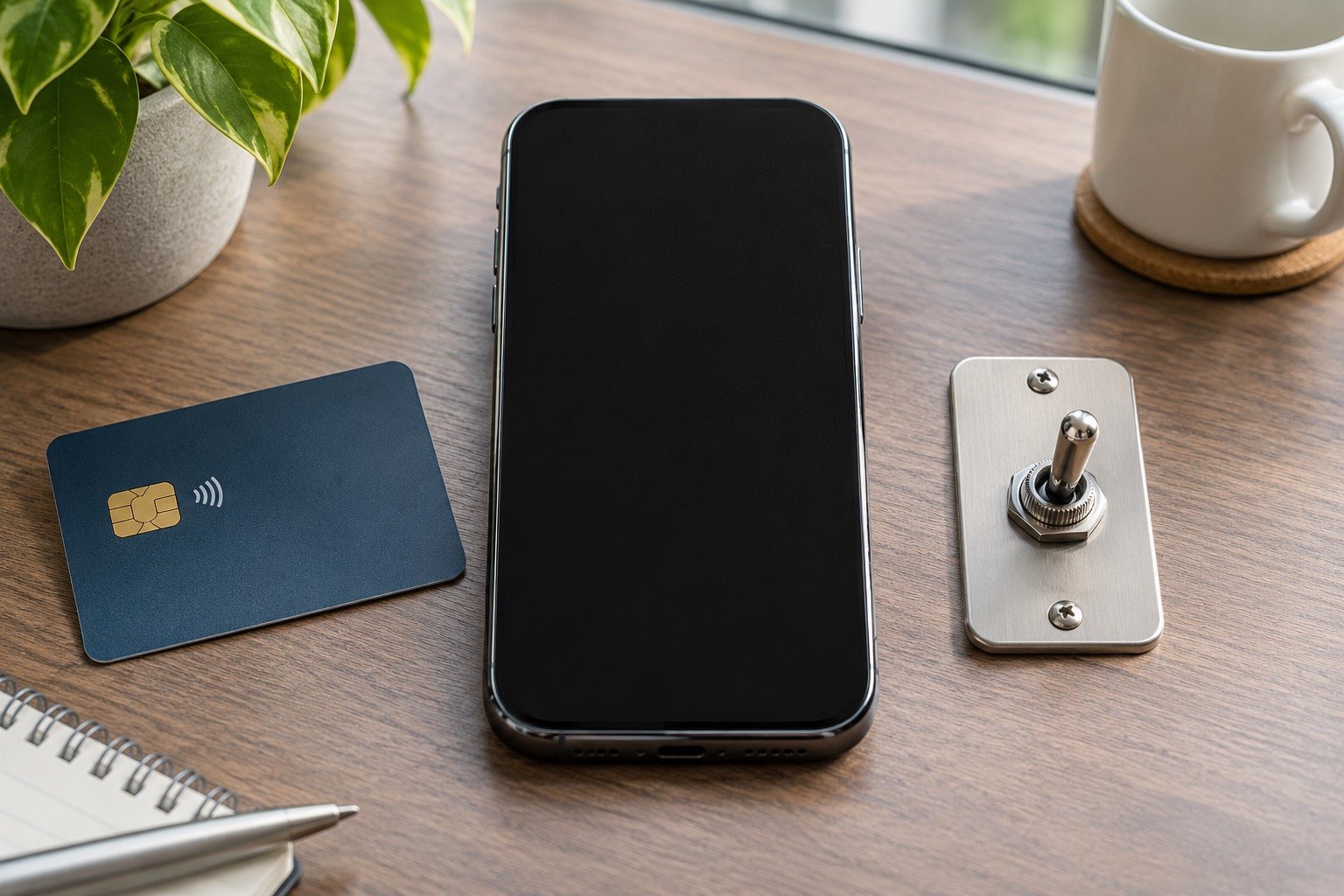
The Reserve Bank of India (RBI) on 23 November 2026 released draft directions to curb electronic banking fraud. Customers could pick a trusted person to approve transfers above a self-set limit. A 'stop switch' would freeze future debits instantly. New accounts would open with digital payment channels off until the customer opts in. Comments close on 14 December 2026.
Syllabus: GS3 · Indian Economy & Growth; GS2 · Statutory & Regulatory Bodies; GS3 · Cyber Security & Money Laundering
Why this matters for UPSC
GS3 economy: banking regulation and the RBI's customer-protection rules against electronic banking fraud. Prelims can ask the zero liability rules and the Banking Regulation Act, 1949; Mains, prevention versus compensation.
Why it matters
A retired teacher pressed by a caller to move her savings at once is the customer this draft has in mind. If she has named her son as trusted person, a large transfer would wait for his approval, and his silence would stop it. Someone who senses a scam mid-call could freeze outgoing payments in one step on the bank's app. The current rules mostly decide who repays a loss after the money has gone; prevention keeps it in the account. The cost is friction: large payments take an extra step, and new accounts start without digital channels. Banks would carry more risk too, because failing to offer these tools would count as their negligence.
Prelims pointers
- Under the RBI's 2026 directions, the bank, not the customer, must prove a customer's liability in a complaint about a fraudulent EBT.
- The 2026 directions give banks at most 45 calendar days to settle a domestic fraud complaint and 60 for a cross-border one; the 2017 circular allowed 90 days.
- An unauthorised EBT is one the customer never authorised; a fraudulent EBT is wider, also covering misuse of fraudulently obtained credentials and approvals given under coercion or duress.
- To claim small-value fraud compensation, a victim must report the fraud to the bank and on the National Cyber Crime Reporting Portal or helpline 1930 within five calendar days.
- Under the 2017 circular, a customer whose own negligence, such as sharing payment credentials, caused a fraud bore the whole loss until reporting it to the bank.
- Under the 2026 directions, a reversed fraudulent EBT is value-dated to its original date, so no interest is lost; credit-card frauds get a shadow reversal within five calendar days.
Practise a UPSC-style question
With reference to the RBI's rules on fraudulent electronic banking transactions, consider the following statements:
1. The RBI issued its 2026 directions limiting customer liability in such transactions under the Reserve Bank of India Act, 1934.
2. In a complaint about such a transaction, the burden of proving the customer's liability lies on the bank.
Which of the statements given above is/are correct?
- (a) 1 only
- (b) 2 only
- (c) Both 1 and 2
- (d) Neither 1 nor 2
Show the answer
Answer: (b) 2 only
Answer: (b) 2 only. The directions cite the Banking Regulation Act, 1949, and put the burden of proof on the bank.
Statement 1: incorrect. The June 2026 directions were issued under Section 35A of the Banking Regulation Act, 1949, which lets the RBI direct banks in the public interest.
Statement 2: correct. The 2026 directions state that the burden of proving customer liability in complaints about fraudulent EBTs lies on the bank.
Eliminate: statement 2 matches the directions' text, so options without 2 go. Out: (a), (d).
Eliminate: statement 1 names the wrong Act. Out: (c).
Trap: Swapped attribution. A familiar RBI-related Act is swapped in for the Banking Regulation Act, 1949, whose Section 35A powers the directions cite.
Remember: RBI directions to banks on customer liability rest on Section 35A of the Banking Regulation Act, 1949.
More from the 24 November 2026 edition
- Coal Ministry guidelines make mine closure integral to every mining plan Environment
- India's first dedicated human metabolic chamber opens at CMC Vellore Sci-Tech
- RBI keeps SBI, HDFC Bank, ICICI Bank as domestic systemically important banks Economy
- COP31 at Antalya ends without a cover decision over fossil fuels Environment
- ICMR's SAMPADA survey, using venous blood, finds lower anaemia estimates National
- India's landslide susceptibility map covers 4.3 lakh sq km Environment
- India, Nepal adopt Joint Vision; India announces Rs 15,000 crore package World & IR