
ICMR's SAMPADA survey, using venous blood, finds lower anaemia estimates
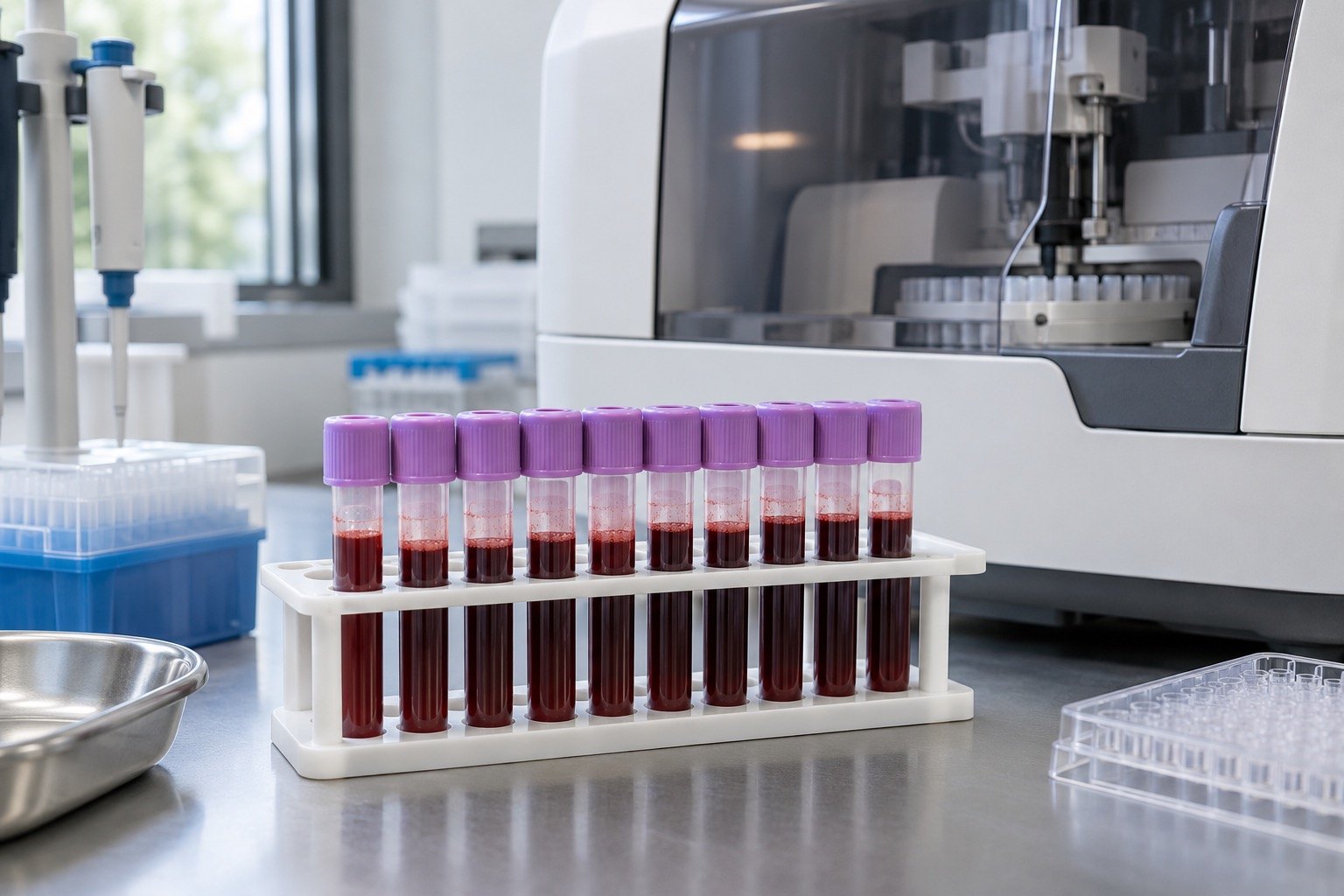
The Indian Council of Medical Research (ICMR) released findings of the SAMPADA survey (2023-25) on 23 November 2026, reporting lower anaemia estimates than earlier national surveys. Anaemia stood at 41.8% among children aged 12-59 months and 55.9% among women of reproductive age. Severe anaemia was under 2% in most groups. Haemoglobin was measured in venous blood on automated analysers.
Syllabus: Prelims · Economy & Social Development; GS2 · Welfare of Vulnerable Sections; GS2 · Health, Education & Human Resources
Why this matters for UPSC
GS2 health: how India measures anaemia, and the Anaemia Mukt Bharat strategy. Prelims can ask SAMPADA's method and AMB's target groups; Mains, why survey methods shift estimates.
Why it matters
An adolescent girl gets a weekly iron-folic acid tablet under Anaemia Mukt Bharat. SAMPADA suggests the tablet may not be enough for many anaemic girls, because iron deficiency is not the whole story: infections, haemoglobin disorders and long-term inflammation also need checking. Since most cases are mild, early testing can catch them before they turn serious, while moderate and severe cases need a confirmed diagnosis, treatment and follow-up. For planners, a more accurate baseline shifts effort towards the groups that carry the burden, such as young children, adolescent girls and women, instead of one approach for all. Future rounds also need to keep the same method, or a change in the numbers could reflect the test, not people's health.
Prelims pointers
- Anaemia Mukt Bharat follows a 6x6x6 strategy: six interventions, six target groups and six institutional mechanisms, in a life-cycle approach.
- AMB's six groups are children 6-59 months, children 5-9 years, adolescents 10-19 years, pregnant women, lactating women and women aged 15-49; adult men are not one.
- AMB interventions include prophylactic iron-folic acid supplementation, deworming, delayed cord clamping, digital testing with point-of-care treatment, and work on malaria, haemoglobinopathies and fluorosis in endemic pockets.
- AMB runs through platforms of the National Iron Plus Initiative and the Weekly Iron Folic Acid Supplementation (WIFS) programme; WIFS targets adolescents aged 10-19 years.
- Under the WHO's 2024 cut-offs used by SAMPADA, men aged 20-59 are anaemic below 13.0 g/dl and non-pregnant women below 12.0 g/dl; severe adult anaemia is below 8.0 g/dl.
- The Secretary of the Department of Health Research is also the Director-General of ICMR.
Practise a UPSC-style question
With reference to the Anaemia Mukt Bharat strategy, consider the following statements:
1. Adult men aged 20-59 years are one of its six target groups.
2. It follows a 6x6x6 strategy of six interventions, six target groups and six institutional mechanisms.
3. Its interventions include testing for anaemia by digital methods along with treatment at the point of care.
Which of the statements given above is/are correct?
- (a) 1 and 2 only
- (b) 2 and 3 only
- (c) 1 and 3 only
- (d) 1, 2 and 3
Show the answer
Answer: (b) 2 and 3 only
Answer: (b) 2 and 3 only. Statements 2 and 3 describe the strategy; adult men are not a target group.
Statement 1: incorrect. AMB's six groups are children 6-59 months, children 5-9 years, adolescents 10-19 years, pregnant women, lactating women and women aged 15-49 (PIB, 2022).
Statement 2: correct. PIB's 2025 note describes AMB, launched in 2018, as a 6x6x6 strategy of six interventions, six beneficiary groups and six institutional mechanisms.
Statement 3: correct. The Health Ministry lists digital testing for anaemia and point-of-care treatment among AMB's interventions (PIB, 2022).
Eliminate: statement 1 is the surest, since men lie outside AMB's life-cycle groups. Out: (a), (c), (d).
Trap: Wrong scope. SAMPADA measured anaemia in men and older adults too, which can make them look like AMB target groups; AMB stops at women of reproductive age.
Remember: AMB's six groups run from children of 6 months to women of 49; adult men are not among them.
More from the 24 November 2026 edition
- Coal Ministry guidelines make mine closure integral to every mining plan Environment
- RBI draft proposes trusted-person approval and stop switch against banking fraud Economy
- India's first dedicated human metabolic chamber opens at CMC Vellore Sci-Tech
- RBI keeps SBI, HDFC Bank, ICICI Bank as domestic systemically important banks Economy
- COP31 at Antalya ends without a cover decision over fossil fuels Environment
- India's landslide susceptibility map covers 4.3 lakh sq km Environment
- India, Nepal adopt Joint Vision; India announces Rs 15,000 crore package World & IR