
UP Cabinet clears ordinance extending panchayat administrators' term pending OBC commission report
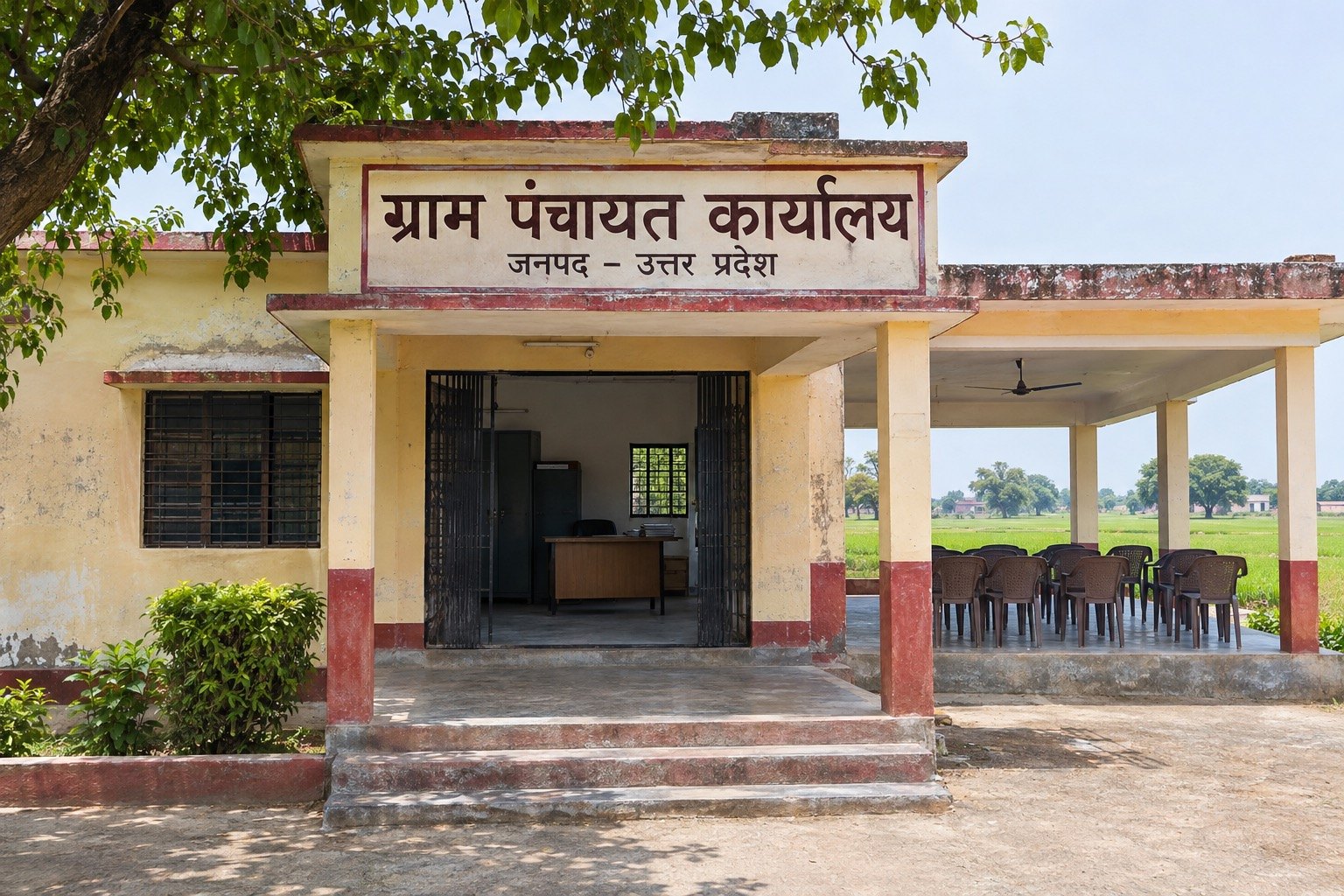
The Uttar Pradesh Cabinet on 18 November 2026 cleared an ordinance under Article 213 to extend panchayat administrators' tenure by six months. The Cabinet set the extension at six months or until the State's dedicated backward classes commission reports. The State cited the Legislature's recess and urgent need. The step comes a month after a court deadline for village polls.
Syllabus: GS2 · Constitution; GS2 · Federalism & Local Government; Prelims · Polity & Governance
Why this matters for UPSC
GS2 polity: Panchayati Raj, Article 243E and the Governor's ordinance power under Article 213. Prelims can ask panchayat terms and the ordinance clock; Mains, delayed local polls.
Why it matters
A villager in Uttar Pradesh who wants a drain cleared or a beneficiary list checked now deals with a former gram pradhan acting as an administrator, not an elected council that must face voters. The ordinance stretches that arrangement while the State waits for data on backward classes. Two constitutional aims pull against each other here: elected local government on time, and seats for backward classes resting on evidence. How governments and courts settle that clash decides whether village democracy can be put on hold while a reservation study runs, and for how long.
Prelims pointers
- Article 243E fixes a Panchayat's term at five years from the date appointed for its first meeting, unless it is dissolved sooner under law.
- Under Article 243E, no amendment of a law can dissolve a Panchayat that is functioning before its five-year duration ends.
- A dissolved Panchayat must be re-elected within six months under Article 243E; no poll is needed if under six months of its term remained.
- Two clocks differ: Article 243E gives six months to re-elect a dissolved Panchayat; an Article 213 ordinance lapses six weeks after the Legislature reassembles.
- Article 243K: the Governor appoints the State Election Commissioner, who can be removed only in the manner and on the grounds of a High Court Judge.
- An ordinance under Article 213 is void to the extent it makes a provision that would be invalid in an Act of the State Legislature.
- A Governor needs the President's instructions before an ordinance whose provisions, as a Bill, would need the President's previous sanction or reservation.
Practise a UPSC-style question
With reference to the duration of Panchayats under the Constitution of India, consider the following statements:
1. Every Panchayat continues for five years from the date its election results are declared, unless dissolved sooner.
2. No election is needed to reconstitute a dissolved Panchayat if less than six months of its term were left.
Which of the statements given above is/are correct?
- (a) 1 only
- (b) 2 only
- (c) Both 1 and 2
- (d) Neither 1 nor 2
Show the answer
Answer: (b) 2 only
Answer: (b) 2 only. The five-year term runs from the first meeting, not from the results.
Statement 1: incorrect. Article 243E runs a Panchayat's five years from the date appointed for its first meeting, not from the day results are declared.
Statement 2: correct. The proviso to Article 243E(3) waives the election when the dissolved Panchayat had under six months of its term remaining.
Eliminate: Statement 1 starts the term on the wrong date, so it is wrong. Out: (a), (c).
Eliminate: Statement 2 matches the proviso to Article 243E(3), so it stands. Out: (d).
Trap: Sounds right. Results day feels like the natural start of a term, but Article 243E counts the five years from the first meeting.
Remember: Panchayat term: five years from its first meeting; a dissolved one is re-elected within six months.
More from the 20 November 2026 edition
- EPFO board approves Systematic Withdrawal Plan, eases final PF withdrawal Economy
- Fourth India-Japan 2+2 backs Japanese live-fire training at Indian ranges World & IR
- MoRTH ties PUC certificate validity to Bharat Stage norm and vehicle age Environment
- Health Ministry drafts rules to make GSDP binding on drug licensees National
- Draft rule would make antimicrobials 'new drugs' needing central approval National
- UNFPA's State of World Population 2026 finds money worries delay parenthood World & IR
- Cyclone Akvan nears Andhra-Odisha coast as Odisha evacuates 50,000 National