
AIIMS repairs spina bifida in the womb, a first for India
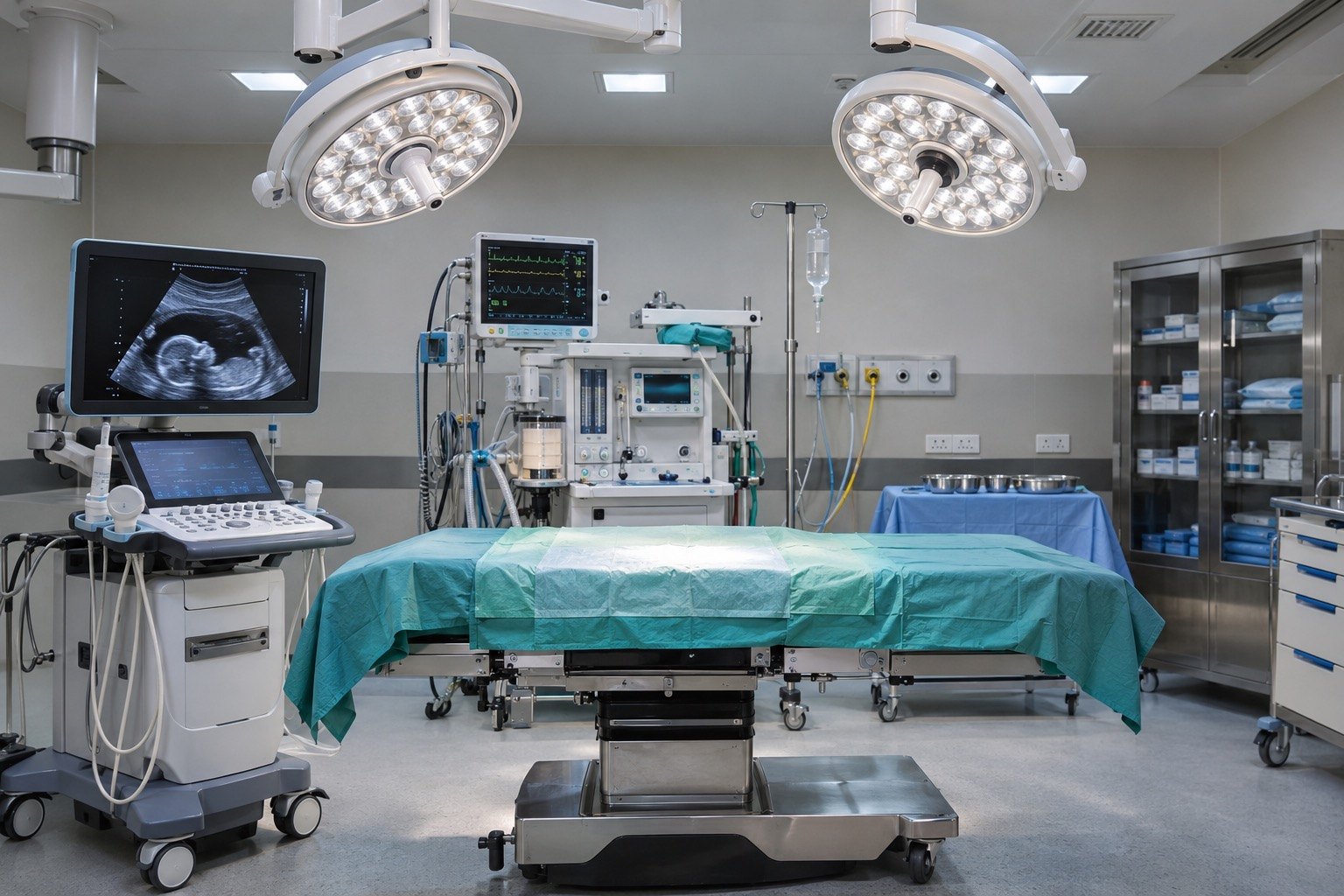
Doctors at AIIMS New Delhi performed India's first open fetal repair of myelomeningocele, the most severe form of spina bifida, on 12 November 2026, at 25 weeks of pregnancy. The six-hour surgery closed the baby's spinal defect before birth. The neurosurgeon who led the team said it is not a cure. Spina bifida is a neural tube defect.
Syllabus: Prelims · Science & Technology; GS2 · Welfare of Vulnerable Sections; GS3 · Indian Achievements in S&T
Why this matters for UPSC
GS2 health and GS3 science: neural tube defects, folic acid and RBSK. Prelims can ask what the neural tube becomes; Mains, preventing birth defects.
Why it matters
For a family told during pregnancy that their baby's spine is open, the usual path has been to wait for birth and accept months of damage first. A public hospital can now offer some of these families an operation before birth, without cost, so fewer children may need brain-fluid drains and more may walk better early on. The gain comes with real risks for the mother, so careful choice of cases and honest counselling matter as much as skill. The larger point is cheaper and simpler: many of these defects can be prevented if women take folic acid before they conceive, because the spine forms before most know they are pregnant.
Prelims pointers
- The AIIMS Act, 1956 itself declares AIIMS an institution of national importance, so the status rests on a law of Parliament, not an executive order.
- The Rashtriya Bal Swasthya Karyakram covers 30 selected health conditions in four groups: defects at birth, deficiencies, diseases of childhood, and developmental delays and disabilities.
- States and UTs may add hypothyroidism, sickle cell anaemia and beta thalassemia to the RBSK list, depending on local disease patterns and testing facilities.
- The World Health Organization names heart defects, neural tube defects and Down syndrome as the most common severe congenital disorders.
- The WHO lists folic acid or iodine through staple-food fortification or supplements, vaccination and care before and during pregnancy as prevention methods.
- The Weekly Iron and Folic Acid Supplementation (WIFS) programme of 2012 targets anaemia in adolescents aged 10-19, not neural tube defects; it gives a weekly iron and folic acid tablet.
Practise a UPSC-style question
With reference to neural tube defects, consider the following statements:
1. Myelomeningocele is the mildest form of spina bifida.
2. The neural tube of an embryo develops into the brain and the spinal cord.
3. The neural tube shuts around four weeks after conception, a stage at which many women are unaware of the pregnancy.
Which of the statements given above is/are correct?
- (a) 1 and 2 only
- (b) 2 and 3 only
- (c) 1 and 3 only
- (d) 1, 2 and 3
Show the answer
Answer: (b) 2 and 3 only
Answer: (b) 2 and 3 only. Myelomeningocele is the gravest type of spina bifida, not the mildest.
Statement 1: incorrect. It is the gravest type: the cord and its membranes bulge out through an opening in the backbone.
Statement 2: correct. The neural tube is the embryo's structure that goes on to form the brain and the spinal cord.
Statement 3: correct. The tube seals roughly four weeks after conception, so the defect arises very early in pregnancy.
Eliminate: statement 1 turns the most severe form into the mildest, so it is wrong. Out: (a), (c), (d).
Trap: Reversed direction. The statement turns the most severe form into the mildest, so a student who knows only the name may tick it.
Remember: Neural tube becomes brain and spinal cord; it closes about 28 days after conception.
More from the 15 November 2026 edition
- Bihar Police flag 1.09 lakh suspected mule accounts across 38 districts National
- Indian Railways approves weekly Janakpur Dham-Ayodhya train, a new India-Nepal link World & IR
- H5N1 avian influenza confirmed in Cuddalore; 1-km culling under national plan National
- India commits over 7 million euros as Elettra 2.0 synchrotron co-partner Sci-Tech
- DPDP Act: Consent Manager registration takes effect, Data Protection Board opens applications Polity
- Pune DEO issues show-cause notice over bulk shifting of voters' addresses Polity
- Tamil Nadu caps paddy, rice and pulse stocks under Essential Commodities Act Economy