
Supreme Court leaves rotation of SC/ST-reserved seats to Parliament
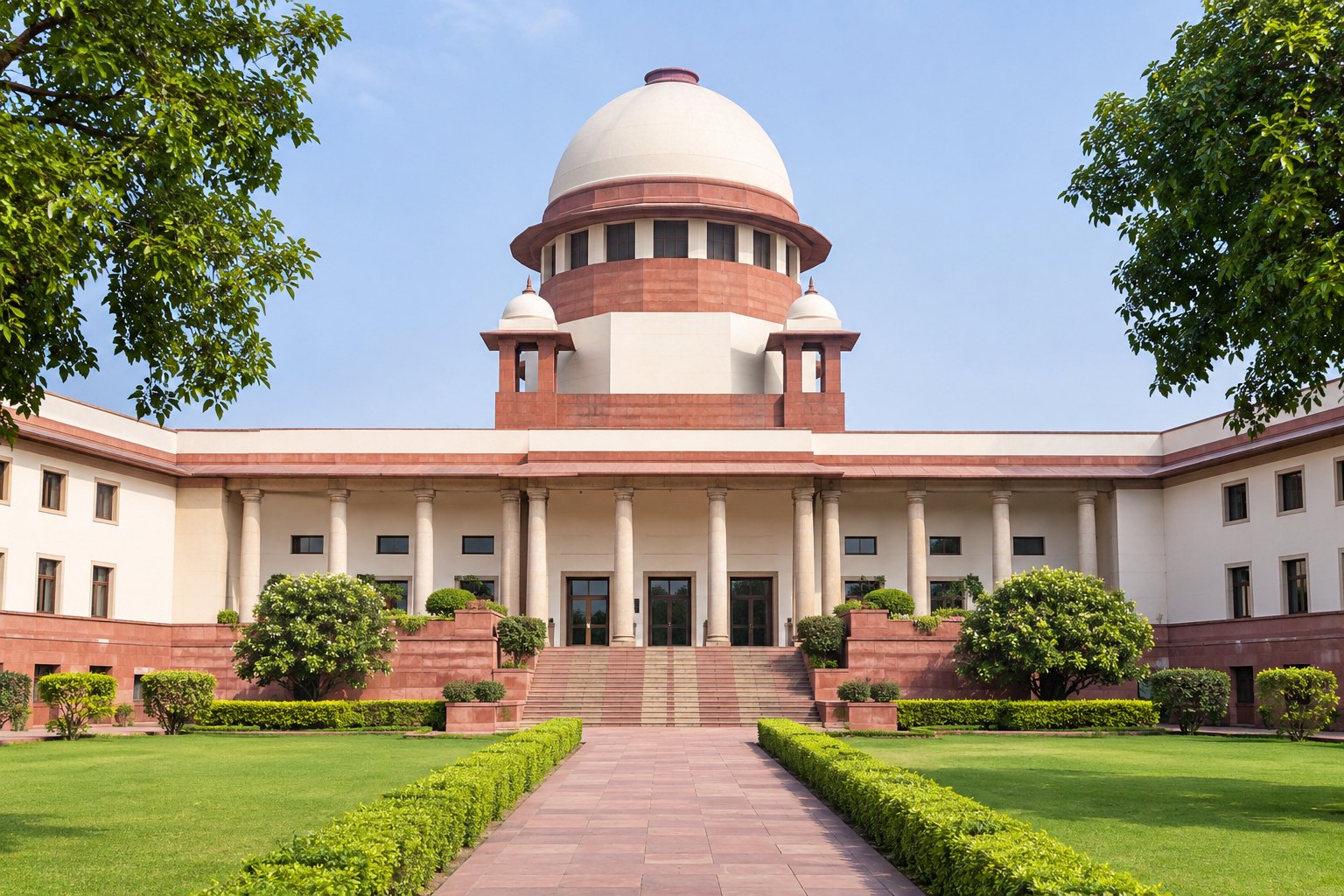
The Supreme Court on 4 November 2026 declined to order rotation of seats reserved for Scheduled Castes and Scheduled Tribes. The plea covered Parliament and State Assemblies. A Bench led by the Chief Justice of India agreed with the Allahabad High Court. That court had held that rotation, though ideal, is for Parliament to decide.
Syllabus: GS2 · Constitution; GS2 · Separation of Powers; GS2 · Parliament & State Legislatures
Why this matters for UPSC
GS2 polity: reservation in legislatures, delimitation and separation of powers. Prelims can ask Articles 330, 332, 334, 243D and 243T; Mains, whether reserved seats should rotate.
Why it matters
A voter in a reserved seat can choose only among SC or ST candidates, and that limit can last over many elections. Rotation would let the reserved status move from seat to seat, so more voters and candidates would share both the benefit and the limit. It could also stop a few families from holding a seat for generations. Against that, a member moved to a new seat each term would struggle to build a local base, and the community's voice could weaken where it is most concentrated. The Court has now said that weighing these is a job for elected members, so any change must come through a law passed by Parliament.
Prelims pointers
- Article 330 reserves Lok Sabha seats for SCs and STs; STs of the autonomous districts of Assam are treated as a separate category.
- Apart from SC and ST seats, Article 332 separately reserves seats in the Assam Assembly for the autonomous districts of that State.
- Rotation of reserved seats is written into Article 243D for Panchayats and Article 243T for Municipalities; the Articles on legislatures contain no rotation clause.
- Article 334 limits SC/ST seat reservation to eighty years from the Constitution's commencement and set seventy years for Anglo-Indian nomination.
- Article 243D reserves not less than one-third of SC/ST Panchayat seats for women of those communities, and rotates reserved Chairperson offices.
- Under the Delimitation Act, 2002, every Assembly constituency must lie wholly within one parliamentary constituency.
Practise a UPSC-style question
With reference to the reservation of seats for Scheduled Castes and Scheduled Tribes in legislatures, consider the following statements:
1. Article 330 reserves seats in the Lok Sabha for them in proportion to their share of a State's population.
2. Article 334 now ends this reservation seventy years after the commencement of the Constitution.
3. The eighty-year period for this reservation in Article 334 was set by the 104th Amendment, 2019.
Which of the statements given above is/are correct?
- (a) 1 and 2 only
- (b) 2 and 3 only
- (c) 1 and 3 only
- (d) 1, 2 and 3
Show the answer
Answer: (c) 1 and 3 only
Answer: (c) 1 and 3 only. Seventy years was the Anglo-Indian limit; SC/ST reservation now runs for eighty years.
Statement 1: correct. Article 330 reserves Lok Sabha seats for Scheduled Castes and Scheduled Tribes, as nearly as may be in proportion to their share of the State's population.
Statement 2: incorrect. Article 334 sets eighty years for SC/ST seat reservation; seventy years applied to the nomination of Anglo-Indians.
Statement 3: correct. The Constitution (One Hundred and Fourth Amendment) Act, 2019 substituted eighty years for SC/ST seat reservation in Article 334.
Eliminate: Statement 2 is the surest, since eighty years is the current figure. Out: (a), (b), (d).
Trap: Near-miss figure. The two periods in Article 334, eighty and seventy years, are swapped so that the Anglo-Indian limit is pinned on SC/ST reservation.
Remember: Article 334: eighty years for SC/ST seats, seventy for Anglo-Indian nomination.
More from the 6 November 2026 edition
- TRAI recommends satellite network provider authorisation and direct-to-device services Sci-Tech
- Supreme Court: Article 22(2)'s 24 hours run from detention, not arrest Polity
- CERT-In issues AI security audit guidelines with six-hour incident reporting Sci-Tech
- US sanctions India-based network over fake registries for Iran's shadow fleet World & IR
- Eleven arrested after 100-day dharna for rehabilitation at LPAI land port National
- UP Chief Electoral Officer orders Assembly and local body rolls matched Polity
- SEBI allows digital KYC from abroad for NRIs, OCIs and foreign nationals Economy
- India issues guidelines to recognise OECMs towards the 30x30 target Environment
- Draft Drugs Rules change proposes immediate licence suspension for NSQ drugs National