
Supreme Court: Article 22(2)'s 24 hours run from detention, not arrest
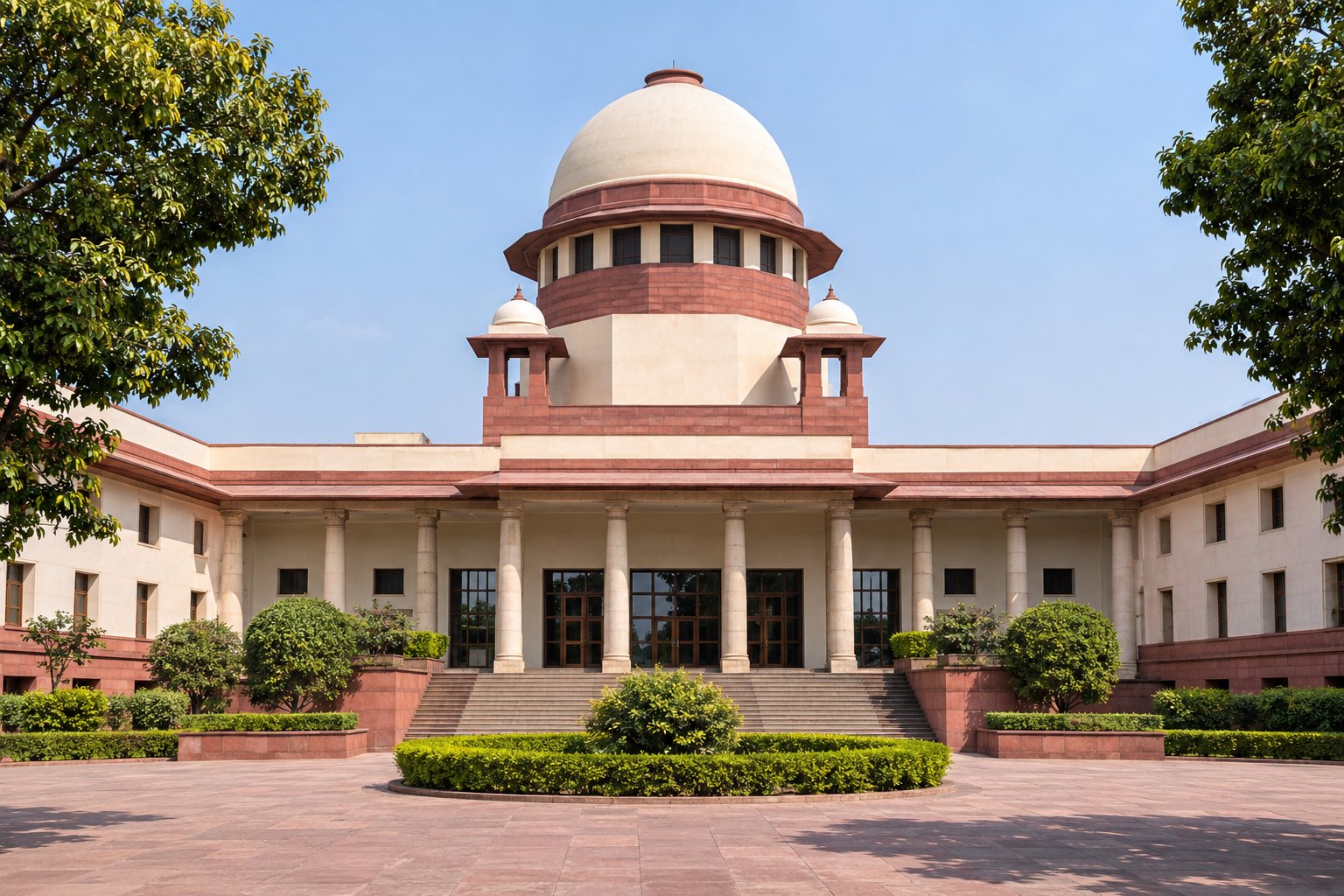
The Supreme Court held on 5 November 2026 that the 24 hours to produce a person before a magistrate under Article 22(2) start when police first detain them, not when they record the arrest. Only travel time to the court is left out. Anyone held longer without being produced must be released.
Syllabus: GS2 · Constitution; Prelims · Polity & Governance; GS2 · Executive & Judiciary
Why this matters for UPSC
GS2 polity: Article 22 safeguards on arrest and custody rules under the BNSS. Prelims can ask what Article 22 excludes; Mains, custodial rights and police accountability.
Why it matters
A person picked up for questioning can spend hours in a police station before anyone writes down an arrest, and no judge knows that the person is being held. Under this ruling those hours count. Police gain nothing by delaying the arrest entry, because the clock is already running, and the magistrate can see from the record how long the custody really lasted. The Court tied such unrecorded custody to the gravest abuses of human rights, including custodial violence. The accused also gets a clear remedy when the deadline is missed: release, even in a drug case where bail is otherwise very hard to win. The larger issue is judicial control over police power at the moment it is most likely to be misused.
Prelims pointers
- Article 22(1) entitles an arrested person to be told the grounds of arrest as soon as may be and to consult a lawyer of their choice.
- Article 22 sits in Part III of the Constitution with the Fundamental Rights; Article 21 on life and personal liberty sits beside it.
- Article 22(3) withholds clauses (1) and (2) from an enemy alien and from a person held under a preventive detention law; ordinary arrests keep both.
- The BNSS, 2023 bars police from holding a person arrested without warrant longer than is reasonable, and never beyond 24 hours without a magistrate's order.
- Under the BNSS, total custody during investigation may not exceed 90 days for offences punishable with death, life or ten years or more, and 60 days otherwise.
- Once the 90- or 60-day limit under the BNSS expires, the accused must be released on bail if ready to furnish it.
- Where no magistrate is available, the BNSS lets an Executive Magistrate authorise custody for up to seven days in all.
Practise a UPSC-style question
With reference to Article 22 of the Constitution of India, consider the following statements:
1. An arrested person has the right to consult, and to be defended by, a legal practitioner of their choice.
2. The time needed for the journey from the place of arrest to the magistrate's court is excluded from the 24 hours.
3. No arrested person may be kept in custody beyond 24 hours without the authority of a magistrate.
Which of the statements given above is/are correct?
- (a) 1 and 2 only
- (b) 2 and 3 only
- (c) 1 and 3 only
- (d) 1, 2 and 3
Show the answer
Answer: (d) 1, 2 and 3
Answer: (d) 1, 2 and 3. All three restate the text of Article 22(1) and 22(2).
Statement 1: correct. Article 22(1) gives the right to be told the grounds of arrest and to consult and be defended by a lawyer of choice.
Statement 2: correct. Article 22(2) leaves out the time needed for the journey from the place of arrest to the court of the magistrate.
Statement 3: correct. Article 22(2) bars custody beyond that 24-hour period without the authority of a magistrate.
Eliminate: statement 3 is the closing words of Article 22(2), so an option without 3 goes. Out: (a).
Eliminate: statement 1 is Article 22(1) word for word, so (b) goes. Out: (b).
Eliminate: statement 2 is the journey-time exclusion the Supreme Court relied on in 2026, so (c) goes. Out: (c).
Trap: Sounds right. A student may suspect the lawyer right is only a statutory one under the criminal procedure law, but Article 22(1) itself grants it.
Remember: Article 22(1) gives grounds and a lawyer; Article 22(2) gives production within 24 hours.
More from the 6 November 2026 edition
- TRAI recommends satellite network provider authorisation and direct-to-device services Sci-Tech
- CERT-In issues AI security audit guidelines with six-hour incident reporting Sci-Tech
- US sanctions India-based network over fake registries for Iran's shadow fleet World & IR
- Eleven arrested after 100-day dharna for rehabilitation at LPAI land port National
- UP Chief Electoral Officer orders Assembly and local body rolls matched Polity
- SEBI allows digital KYC from abroad for NRIs, OCIs and foreign nationals Economy
- India issues guidelines to recognise OECMs towards the 30x30 target Environment
- Supreme Court leaves rotation of SC/ST-reserved seats to Parliament Polity
- Draft Drugs Rules change proposes immediate licence suspension for NSQ drugs National