
Supreme Court sets time limits for rehabilitating rescued bonded labourers
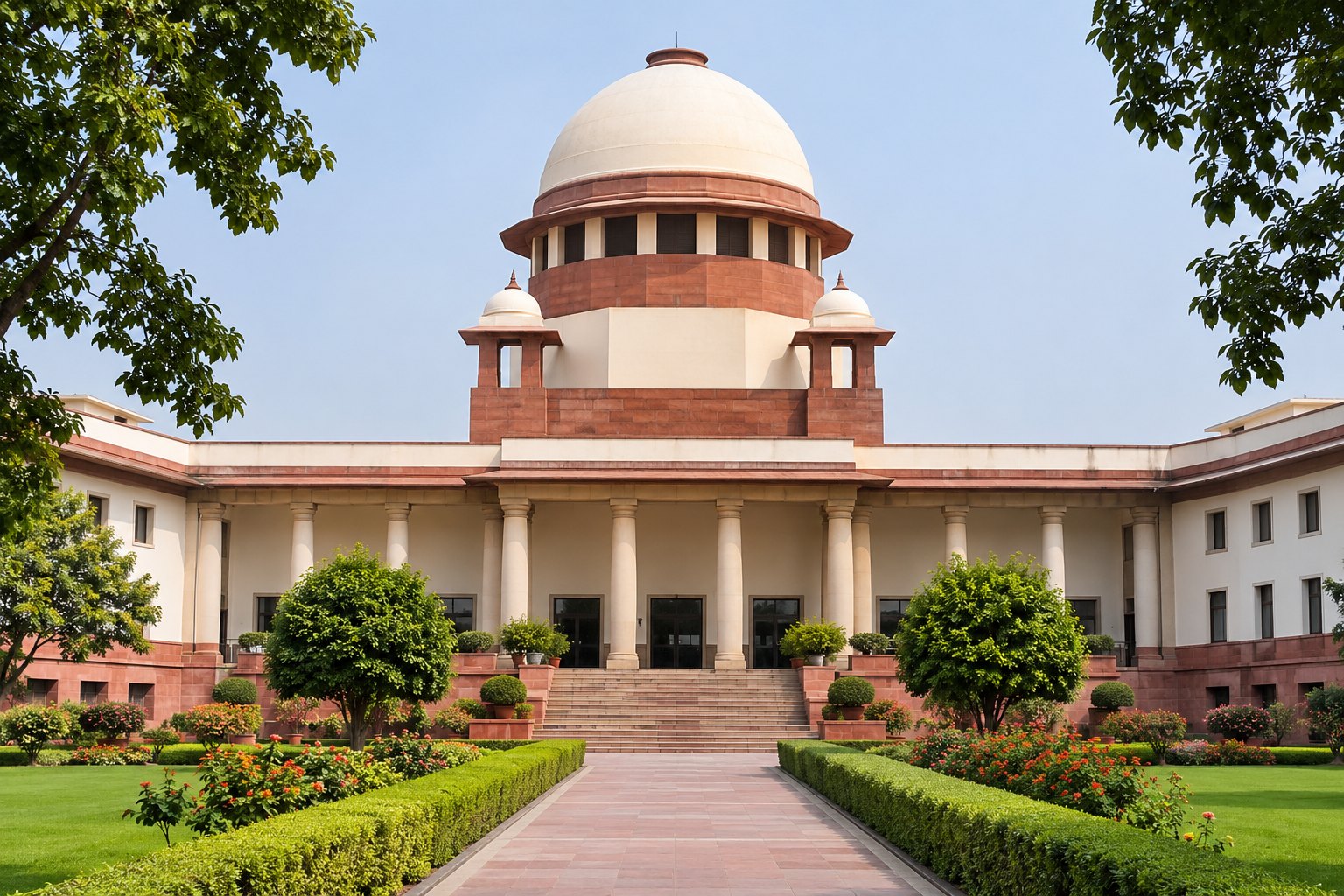
The Supreme Court on 2 November 2026 held that the State's duty to bonded labourers does not end when they are freed. It asked the Centre to frame one national procedure for paying rescued workers financial aid within seven days of release. The Centre must also consider a better-funded rehabilitation scheme within three months.
Syllabus: GS2 · Constitution; Prelims · Polity & Governance; GS2 · Government Policies
Why this matters for UPSC
GS2 polity and welfare: Article 23 and protection of vulnerable sections. Prelims can ask the 1976 Act's Vigilance Committees and the rehabilitation scheme; Mains, rehabilitation gaps.
Why it matters
A worker freed from a debt bond often walks out with no savings, no job and no papers, sometimes in a State whose language he cannot speak. If the promised money takes months, the old lender or a new one is often the only way to eat, and the cycle of bondage starts again. Firm time limits for checking a complaint, certifying release and paying aid shorten that dangerous gap. Linking freed workers to existing job schemes gives them a steady income in place of a one-time grant. The case also tests whether a right written into the Constitution reaches the poorest workers, many of them migrants.
Prelims pointers
- Article 23 sits under the Right against Exploitation in Part III, alongside Article 24.
- Article 23 permits compulsory service for public purposes, but forbids discrimination in it on grounds only of religion, race, caste or class.
- Look-alike: Article 23 bans trafficking, begar and forced labour; Article 24 bars children below fourteen from factories, mines and other hazardous work.
- The bonded labour system was abolished by law from 25 October 1975; the Bonded Labour System (Abolition) Act, 1976 later replaced that law.
- A district Vigilance Committee is chaired by the District Magistrate, who nominates three Scheduled Caste or Scheduled Tribe residents and two social workers to it.
- Vigilance Committees also channel credit from rural banks and co-operatives to freed workers and defend suits for recovery of bonded debts.
- The 1976 Act lets Executive Magistrates use a first or second class Judicial Magistrate's powers to try offences.
- Under the 2021 scheme, rescued labourers get up to Rs 30,000 at once and Rs 1, 2 or 3 lakh by category, per the 2025 ministry reply.
Practise a UPSC-style question
With reference to Article 23 of the Constitution of India, consider the following statements:
1. It prohibits begar and other similar forms of forced labour, and makes a breach punishable by law.
2. It allows the State to impose compulsory service for public purposes.
3. While imposing such compulsory service, the State may not discriminate on grounds only of sex.
Which of the statements given above is/are correct?
- (a) 1 and 2 only
- (b) 2 and 3 only
- (c) 1 and 3 only
- (d) 1, 2 and 3
Show the answer
Answer: (a) 1 and 2 only
Answer: (a) 1 and 2 only. Article 23 bans forced labour but permits compulsory public service, and its non-discrimination list leaves out sex.
Statement 1: correct. Article 23 prohibits traffic in human beings, begar and similar forced labour; any contravention is an offence punishable in accordance with law.
Statement 2: correct. Article 23 lets the State impose compulsory service for public purposes, which is an exception to the ban.
Statement 3: incorrect. The grounds listed in Article 23 are religion, race, caste or class, or any of them; sex is not on that list.
Eliminate: Statement 3 is wrong because sex is absent from the list of grounds. Out: (b), (c), (d).
Trap: Sounds right. Many Fundamental Rights list sex as a ground, so a student assumes Article 23 does too; its list stops at religion, race, caste and class.
Remember: Article 23 permits compulsory public service; it bars discrimination only on religion, race, caste or class.
Explainers on this topic
More from the 4 November 2026 edition
- Draft Drugs Rules amendment: drug makers to authorise a batch-release person National
- India seeks COP31 decision to launch Climate Finance Work Programme Environment
- NITI Aayog launches India S&T Scoreboard to benchmark States' science Sci-Tech
- Centre can direct airlines on fares in extraordinary situations Economy
- Indian Navy frees hijacked fishing vessel Azini from pirates off Somalia Defence
- North Central Railway commissions Kavach 4.0 on Karchana-Mirzapur, reaching 785 km Sci-Tech
- Supreme Court sets aside Rajasthan SEC's voter awareness refusal: no monopoly Polity
- Home Ministry plans FRROs in every State capital by 2027 Polity
- Supreme Court allows certified green crackers in Delhi-NCR on 7-8 November Environment