
DGMA bars Indian seafarers from Sarawak's inland and coastal vessels
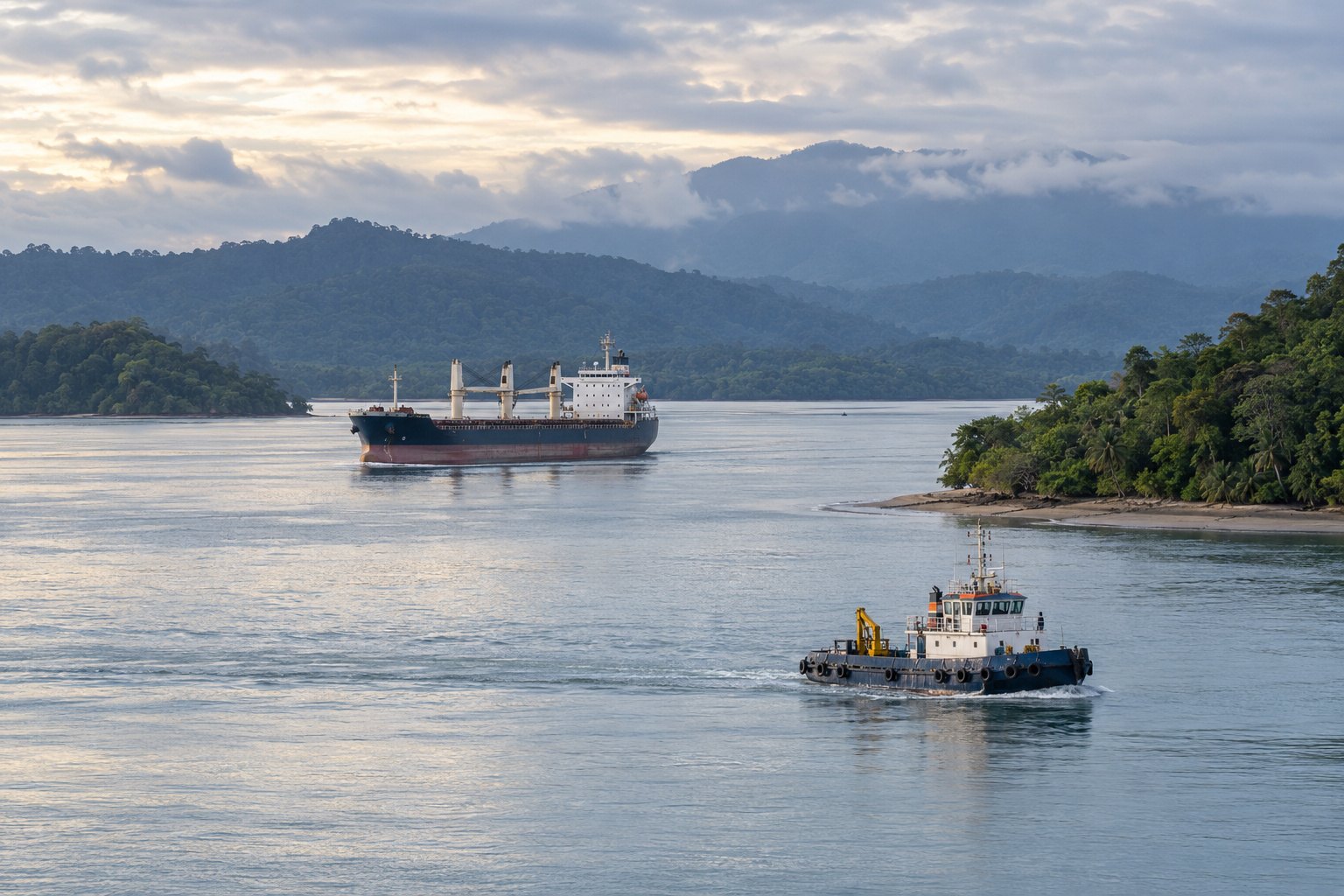
The Directorate General of Maritime Administration (DGMA) on 8 October 2026 barred licensed recruitment agencies from placing Indian seafarers on vessels operating only in the inland, riverine, coastal or port-limit waters of Malaysia's Sarawak Region. Its Circular 66 of 2026, issued under section 301 of the Merchant Shipping Act, 2025, cites recurring fatal accidents involving young Indian seafarers.
Syllabus: Prelims · Geography; GS2 · Statutory & Regulatory Bodies; GS3 · Infrastructure
Why this matters for UPSC
GS2 statutory bodies and the Indian diaspora: Prelims can ask what section 301 of the Merchant Shipping Act, 2025 allows, where the Maritime Labour Convention does not apply, and Sarawak's map facts; Mains, about protecting seafarers working abroad.
Why it matters
A young Indian sailor offered a job on a small river or coastal boat in Sarawak can no longer be sent there by an Indian agency, because the government has found that such jobs keep ending in deaths. India cannot inspect a Malaysian boat, but it can control who hires its citizens, so it acts through the agencies it licenses. The trade-off is real: the bar closes a set of jobs, and some seafarers may look for unlicensed recruiters. The larger issue is how a country with a large seafaring workforce protects its people on foreign vessels, especially small craft that fall outside the international labour rules for ships.
Prelims pointers
- Merchant Shipping Act, 2025 (Act 24 of 2025): assented to on 18 August 2025; section 7 lets the Central Government appoint the Director-General by notification.
- Section 62: a seafarer may be engaged only by a licensed recruitment and placement service agency, or by an Indian vessel's owner for its own vessel.
- Section 58(2): seafarers bear no recruitment fee except a medical certificate, seafarer's book and passport; the ship owner bears visa costs.
- Section 57(1) excludes four classes from MLC standards: inland or port-water vessels, fishing vessels, dhows and junks, and warships or naval auxiliaries.
- Section 57(4): the ship owner and the recruitment and placement service provider are jointly and severally liable for the ship owner's duties.
- Section 59 sets 16 years as the minimum age for work onboard; section 56(3) deems seafarers key workers for shore leave and medical care.
- MLC, 2006 was adopted on 23 February 2006 by the 94th (Maritime) Session of the International Labour Conference and entered into force on 20 August 2013.
- Sarawak: about 800 km along northwest Borneo; South China Sea offshore; Kalimantan (Indonesia) inland; Sabah northeast; Brunei a double enclave; Batang Rajang is Malaysia's longest river.
Practise a UPSC-style question
With reference to the Merchant Shipping Act, 2025, consider the following statements:
1. Section 301 of the Act vests the power to give directions to recruitment and placement service providers in the Shipping Corporation of India.
2. The Director-General of Maritime Administration is appointed by the Central Government by notification under the Act.
Which of the statements given above is/are correct?
- (a) 1 only
- (b) 2 only
- (c) Both 1 and 2
- (d) Neither 1 nor 2
Show the answer
Answer: (b) 2 only
Answer: (b) 2 only. The direction power belongs to the Director-General, whom the Central Government appoints.
Statement 1: incorrect. Section 301 lets the Director-General, not the Shipping Corporation of India, give directions by notice, circular, order or guidelines to recruitment and placement service providers and others.
Statement 2: correct. Section 7(1) of the Merchant Shipping Act, 2025 lets the Central Government, by notification, appoint the Director-General of Maritime Administration.
Eliminate: Statement 1 credits section 301 to a shipping company instead of the statutory regulator. Out: (a), (c).
Eliminate: Statement 2 matches section 7(1). Out: (d).
Trap: Swapped attribution. A real statutory power is pinned on a familiar public-sector shipping company instead of the Director-General who holds it.
Remember: Section 301, MS Act 2025: the Director-General gives directions; section 7: the Centre appoints the Director-General.
More from the 18 October 2026 edition
- Ethanol blending: 2026-27 tender shuts out sugar-based feedstocks Economy
- NPPA notifies 30% trade-margin cap on 137 anti-cancer drugs National
- Deep magnitude-6.9 quake jolts Kamchatka on the Pacific Ring of Fire World & IR
- First tranche of India-US Bilateral Trade Agreement finalised, in legal drafting World & IR
- PRODES satellite survey puts Brazil's Amazon clearing at a series low Environment
- SEBI recasts Closing Auction Session; expiry settlement moves to VWAP Economy