
Sal borer outbreak prompts tree felling and trapping in Dindori
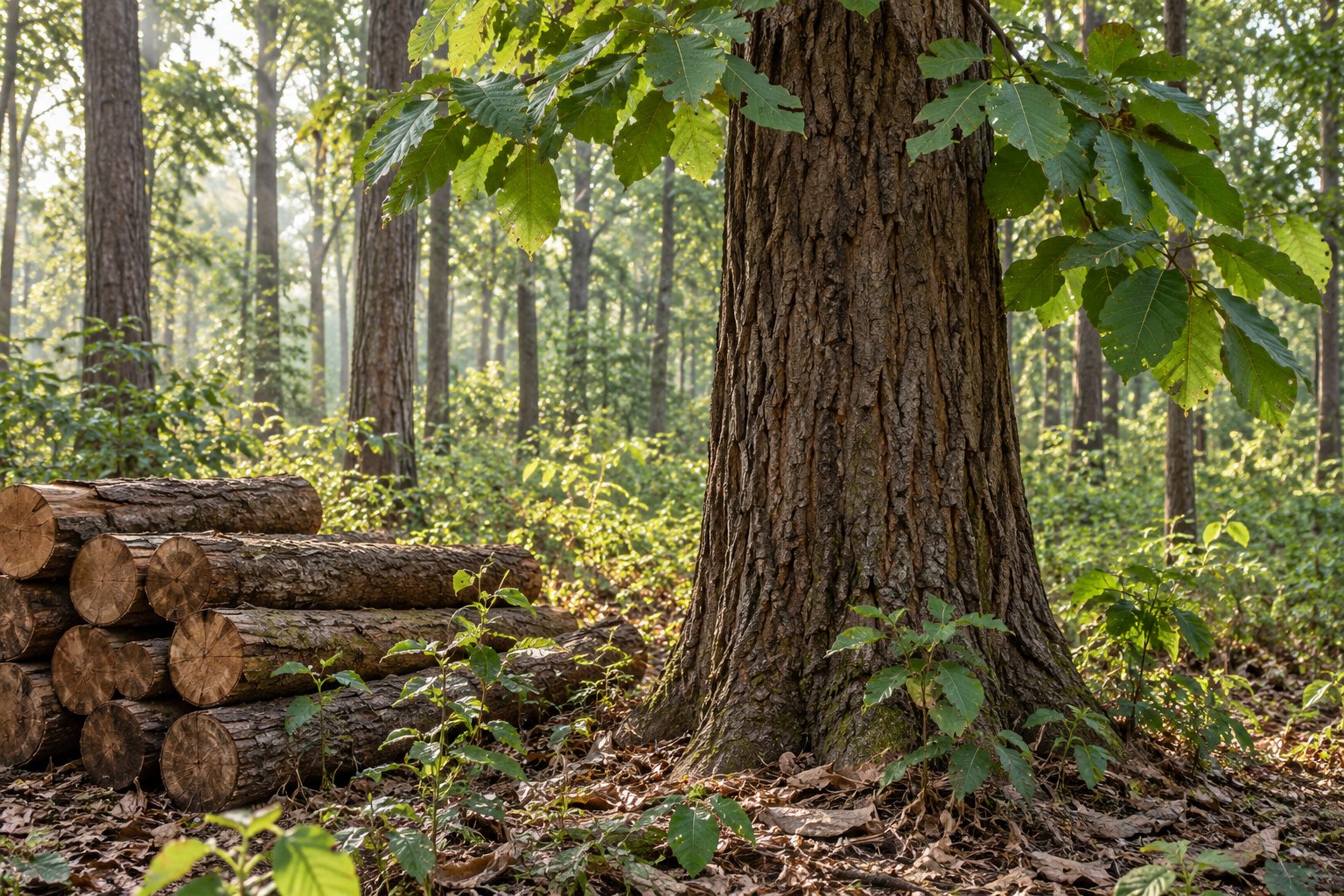
The Centre in September 2026 approved felling 1,46,784 sal trees hit by the sal heartwood borer in Madhya Pradesh's Dindori district; felling was expected to begin in October. Alongside trap trees that lure the beetles, the forest department had bought 19,25,118 of them from villagers by mid-September, at Rs 2 each.
Syllabus: Prelims · Environment & Ecology; GS1 · Geophysical Phenomena; GS3 · Environment & Conservation
Why it matters
For a tribal family living beside Dindori's sal forests, the outbreak brings both a loss and a small income. Trees that supply timber, seed oil and leaves for leaf plates are to be cut down, while every beetle handed in earns Rs 2. The Dindori response shows two management approaches: collecting adult beetles and removing already-infested trees. Felling on this scale takes out mature trees, but trunks left standing would keep breeding beetles for the next monsoon. For UPSC, this is a concrete Indian example of forest-pest management, community participation and the trade-offs involved in sanitation felling. Outbreaks return in weather-driven cycles, so preventive work between outbreaks matters as much as felling once trees are dying.
Prelims pointers
- Sal heartwood borer: Hoplocerambyx spinicornis, a longhorn beetle; host tree sal (Shorea robusta).
- Trap-tree method: one or two sal trees of 60-90 cm girth per hectare are felled and cut into logs; the smell of sap lures adult beetles.
- Epidemic threshold: a sal borer attack is treated as an epidemic when more than 1% of the sal trees are affected.
- Life cycle: year-long; larvae bore into the heartwood and pupate inside the tree, and adults emerge with the monsoon in June-July.
- Sal produce besides timber: seed oil and leaves for leaf plates; FSSAI's chocolate standard lists sal fat as a permitted cocoa butter equivalent, within 5% of the product.
- 1998: the Supreme Court stayed felling of borer-hit sal in Madhya Pradesh, ordered category-wise marking and formed a committee under the Director, Tropical Forest Research Institute, Jabalpur.
Practise a UPSC-style question
With reference to the sal heartwood borer, consider the following statements:
1. It is a longhorn beetle of the family Cerambycidae, and its main host is sal (Shorea robusta).
2. Besides sal, it is known to infest some other trees, among them the rubber tree (Hevea brasiliensis).
3. It usually attacks healthy, vigorous sal trees and seldom infests weak or damaged ones.
Which of the statements given above is/are correct?
- (a) 1 and 2 only
- (b) 2 and 3 only
- (c) 1 and 3 only
- (d) 1, 2 and 3
Show the answer
Answer: (a) 1 and 2 only
1 is correct: Hoplocerambyx spinicornis belongs to Cerambycidae, the longhorn beetle family of the order Coleoptera, and sal is its primary host. 2 is correct: sal is its main host, but it also attacks other trees, the rubber tree (Hevea brasiliensis) among them. 3 is incorrect: it usually attacks weak, damaged trees, though it can infest healthy ones too. Hence 1 and 2 only.
More from the 4 October 2026 edition
- PMAY-G 2.0: 3 lakh Andhra houses, 3D concrete-printed pilot in Guntur National
- IAF needs 36-40 fighters a year, says Air Chief A P Singh Defence
- Uttarakhand publishes post-SIR voter roll, about 8 lakh fewer electors Polity
- India logs 3,832 child leprosy cases, far above 2025-26 target National
- India's food market pegged at $550-600 billion, says MoFPI official Economy
- Railways use AI alerts and Plan Bee to protect elephants Environment
- Apple pulls Bitchat from India App Store after MeitY demand National
- Education Ministry approves five Centres of Excellence for classical languages National