
UN General Assembly meeting approves first Declaration on Sea Level Rise
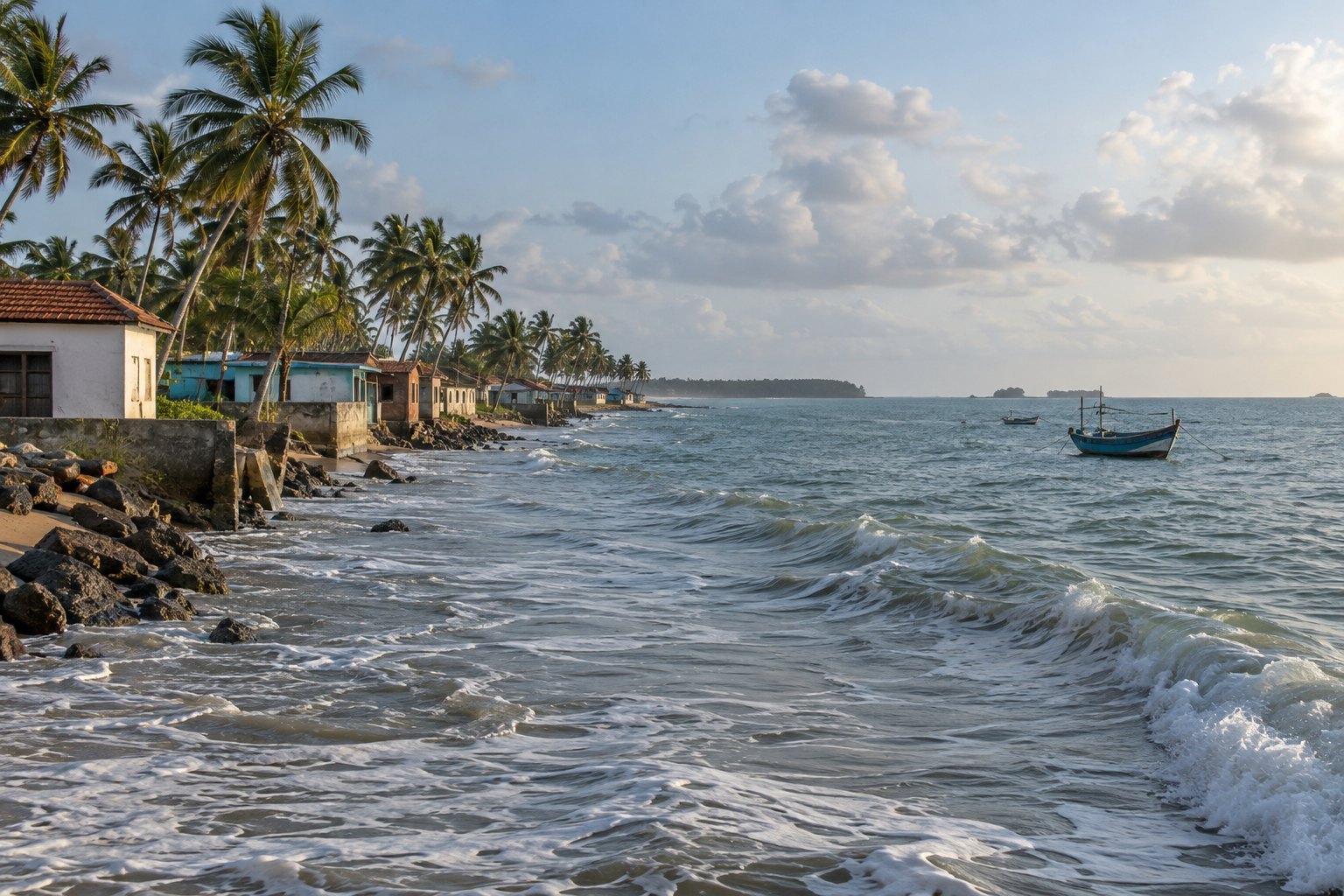
World leaders at a high-level meeting of the UN General Assembly approved the UN Declaration on Sea Level Rise by consensus on 24 September 2026, the first on the subject. It affirms a presumption in favour of continued statehood and UN membership for States losing land, and says they can maintain maritime zones set under UNCLOS. India welcomed the declaration.
Syllabus: Prelims · Environment & Ecology; GS1 · Geophysical Phenomena; GS3 · Disaster Management
Why it matters
For a family on a low-lying atoll in Tuvalu or the Marshall Islands, the fear was double: losing the land, and with it the country itself, its nationality, its UN seat and the sea zones its government earns from. The declaration answers the second fear. UN member states, the United States included, agreed by consensus that such a State is presumed to continue and can keep its maritime zones. It is a political declaration, not a binding treaty, and it brings no new money. Questions of relocation, nationality and compensation stay open. Nearly 770 million people live less than five metres above the high-tide line, and the Secretary-General's report names Kolkata and Mumbai among cities at risk.
Prelims pointers
- Montevideo Convention, 1933, Article 1: a State needs a permanent population, a defined territory, a government and the capacity to enter into relations with other States.
- Montevideo Convention, 1933, Article 3: the political existence of a State is independent of recognition by other States.
- UNCLOS: opened for signature at Montego Bay, Jamaica, on 10 December 1982; in force since 16 November 1994.
- UNCLOS limits, measured from baselines: territorial sea 12 nautical miles, contiguous zone 24 nautical miles, exclusive economic zone 200 nautical miles.
- Normal baseline (UNCLOS Article 5): the low-water line along the coast, as marked on large-scale charts officially recognised by the coastal State.
- UNCLOS Article 121: rocks that cannot sustain human habitation or economic life of their own have no exclusive economic zone or continental shelf.
- International Law Commission: set up by the General Assembly in 1947 for the progressive development and codification of international law; it sits at Geneva.
- International Court of Justice advisory opinions: requested by the General Assembly, the Security Council or authorised UN bodies under Article 96 of the UN Charter; not binding.
Practise a UPSC-style question
With reference to the Montevideo Convention on the Rights and Duties of States, 1933, consider the following statements:
1. It lists a permanent population and a defined territory among the qualifications of a State.
2. It makes the political existence of a State dependent on recognition by other States.
3. It was signed at a conference of American States held in Uruguay.
Which of the statements given above is/are correct?
- (a) 1 and 2 only
- (b) 2 and 3 only
- (c) 1 and 3 only
- (d) 1, 2 and 3
Show the answer
Answer: (c) 1 and 3 only
1 is correct: Article 1 lists four qualifications of a State: a permanent population, a defined territory, a government and the capacity to enter into relations with other States. 2 is incorrect: Article 3 says the political existence of a State is independent of recognition by other States. 3 is correct: it was signed on 26 December 1933 at the Seventh International Conference of American States in Montevideo, the capital of Uruguay.