
IN-SPACe issues norms for hosted payloads on Indian and foreign satellites
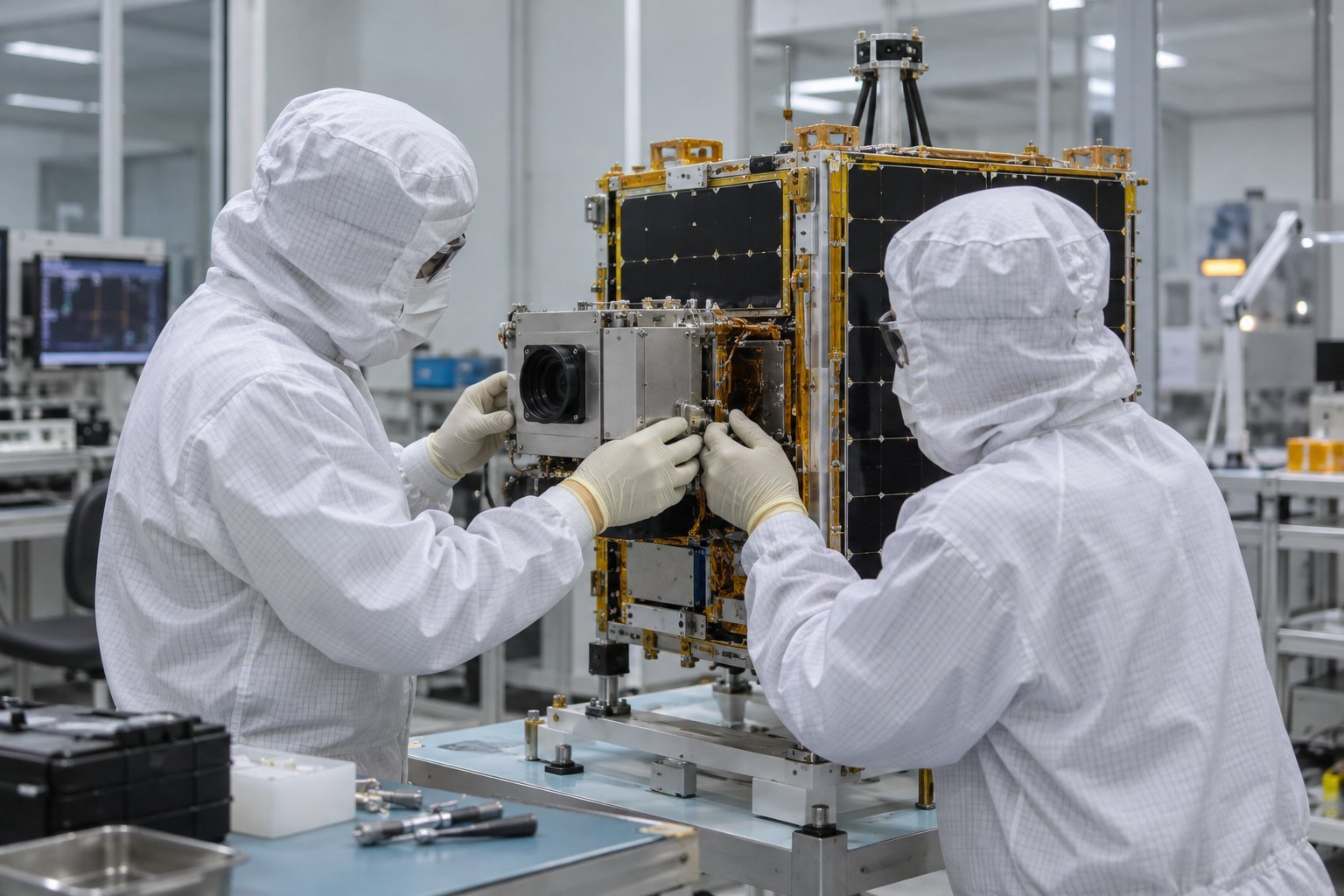
The Indian National Space Promotion and Authorisation Centre (IN-SPACe) on September 17, 2026 released norms for authorising hosted payloads, instruments carried on another owner's satellite. An Indian-owned payload needs IN-SPACe authorisation on an Indian or a foreign satellite. A foreign owner's payload on an Indian satellite needs none; the Indian host must give IN-SPACe its details.
Syllabus: GS2 · Statutory & Regulatory Bodies; GS2 · Government Policies; GS3 · IT, Space, Biotech & IPR
Why it matters
A start-up that has built a camera or a sensor need not build and launch a whole satellite to fly it. It can place the instrument on someone else's satellite, or on the spent upper stage of a PSLV rocket. IN-SPACe calls this a cost-effective and efficient way to reach space. The norms tell such a firm when to apply, what its contract with the host must say and how long the permission lasts. They also keep the State in control: an Indian host must be able to switch off a foreign payload, and imaging Indian territory through it needs IN-SPACe's approval. The larger issue is how India opens space to private and foreign business while remaining responsible, under the Outer Space Treaty, for private space activities too.
Prelims pointers
- IN-SPACe: autonomous government organisation in the Department of Space, based in Ahmedabad; single-window agency authorising space activities of government entities and Non-Government Entities.
- Indian Space Policy 2023: ISRO does research and development, NewSpace India Limited (NSIL) commercialises publicly funded technologies, and the Department of Space is the nodal department.
- POEM: ISRO's low-cost orbital platform that uses the spent fourth stage (PS4) of the Polar Satellite Launch Vehicle to support payloads.
- International Telecommunication Union (ITU): United Nations specialised agency in Geneva allocating radio spectrum and satellite orbits; the WPC Wing of the Department of Telecommunications represents India there.
- Outer Space Treaty, 1967: States are responsible for national space activities, whether carried out by governmental or non-governmental entities.
- Liability Convention, 1972: a launching State is absolutely liable for damage its space object causes on the Earth's surface or to aircraft; in space, liability rests on fault.
- Registration Convention: the United Nations Secretary-General maintains the Register of Objects Launched into Outer Space; India keeps its own National Registry of Space Objects.
- Ground sampling distance: IN-SPACe authorisation is needed to disseminate remote sensing data of 30 cm or finer; coarser data needs intimation to IN-SPACe.
Practise a UPSC-style question
With reference to the Indian National Space Promotion and Authorisation Centre (IN-SPACe), consider the following statements:
1. It functions as an autonomous Government organisation within the Department of Space.
2. It is the single-window agency for authorising space activities of government entities as well as Non-Government Entities.
3. Its authorisation is required for disseminating remote sensing data with a ground sampling distance of 30 cm or finer.
Which of the statements given above is/are correct?
- (a) 1 and 2 only
- (b) 2 and 3 only
- (c) 1 and 3 only
- (d) 1, 2 and 3
Show the answer
Answer: (d) 1, 2 and 3
1 is correct: the Indian Space Policy 2023 describes IN-SPACe as an autonomous Government organisation, and it sits within the Department of Space. 2 is correct: the policy makes it the single-window agency for space activities of government entities as well as Non-Government Entities, so its remit is wider than private players. 3 is correct: disseminating high-resolution remote sensing data, of ground sampling distance of 30 cm or finer, needs its authorisation, while coarser data needs intimation to it.