
Centre doubles environmental clearance validity for ports to 20 years
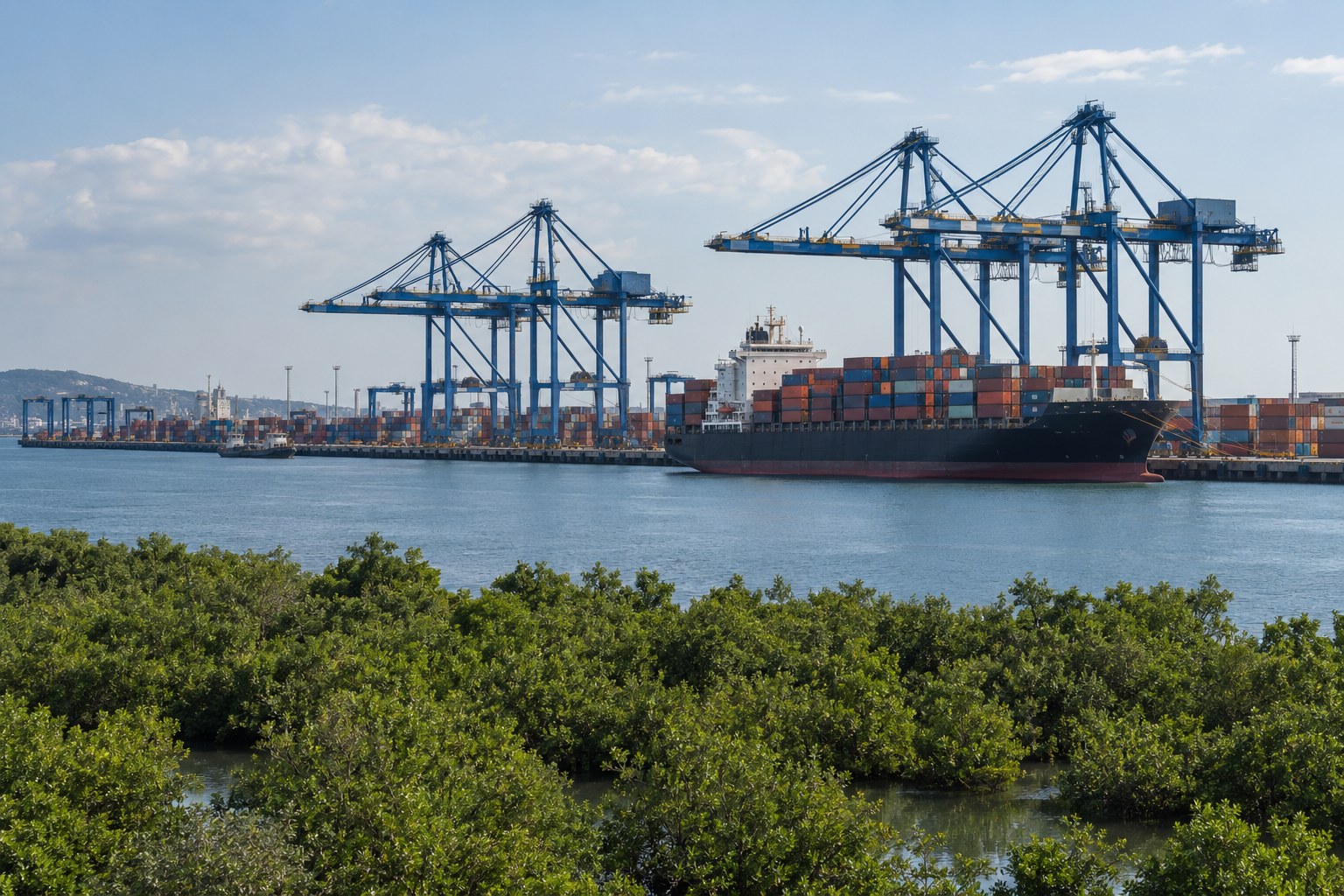
The Environment Ministry has amended the EIA Notification 2006 to make environmental clearances for ports and harbours valid for a minimum of 20 years, up from ten. Two five-year extensions are possible if appraisal committees find safeguards adequate, the second only in deserving cases where the project has not been operationalised. The notification was published on Monday.
Syllabus: Prelims · Environment & Ecology; GS3 · Infrastructure; GS3 · Environment & Conservation
Why it matters
Ports take many years to build and grow in phases, often adding capacity for new cargo such as liquefied natural gas. A longer clearance window means fewer repeat approvals, but critics worry that fewer reviews weaken environmental oversight of coastal projects. The change shows how expert committees and ministries negotiate the balance between ease of doing business and environmental safeguards.
Prelims pointers
- Environmental clearances under EIA Notification 2006 rest on impact assessment studies, public hearings and expert committee appraisal.
- Sectoral and state-level expert appraisal committees can recommend extensions after examining environmental safeguards.
- A draft of the amendment was published on May 20, 2026 before public comments were considered.
- Mining projects already enjoy clearance validity aligned to the project period, the model the ports ministry cited.
Practise a UPSC-style question
Consider the following statements about the amended validity of environmental clearances for ports and harbours:
1. Clearances for ports and harbours are now valid for a minimum of 15 years.
2. A first five-year extension depends on appraisal committees examining whether existing environmental safeguards are adequate.
3. A second five-year extension may be given in deserving cases where the project was not operationalised within the first extension.
Which of the statements given above is/are correct?
- (a) 1 and 2 only
- (b) 2 and 3 only
- (c) 1 and 3 only
- (d) 1, 2 and 3
Show the answer
Answer: (b) 2 and 3 only
1 is incorrect: the amendment doubles the validity from ten years to a minimum of 20 years. 2 is correct: an extension beyond the 20 years needs appraisal committees to examine the adequacy of existing environmental safeguards. 3 is correct: a second five-year extension is available in deserving cases where the project has not been operationalised within the first.
More from the 23 September 2026 edition
- Election Commission freezes Trinamool Congress name and symbol Polity
- FCRA Amendment Bill 2026 would vest lapsed NGOs' foreign assets in government Polity
- ISRO and ESA renew space cooperation till 2032 Sci-Tech
- Supreme Court holds UP Gangsters Act 'stillborn' Polity
- Punjab's groundwater extraction rate eases to 152%; 110 of 153 blocks over-exploited Environment
- US law provides for up to 100% tariffs on top Russian-oil buyers World & IR
- 0.4% MDR on UPI merchant payments above Rs 2,000 from October 15 Economy
- BRICS Delhi Declaration notes UNSC Resolution 2803, reaffirms 1967 borders World & IR
- India-New Zealand free trade agreement takes effect October 20 Economy