
Quad leaders unveil maritime surveillance collaboration at Manila summit
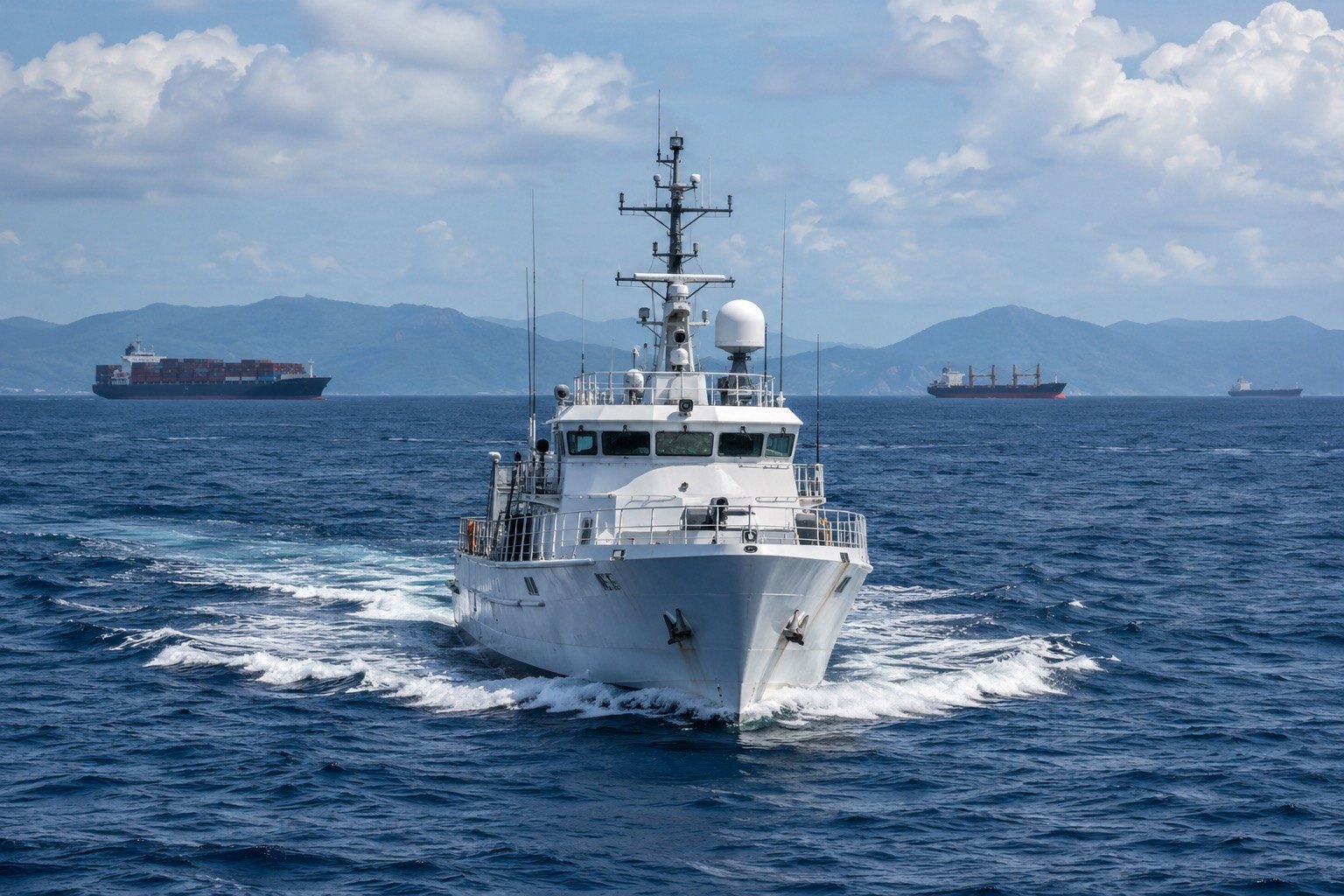
Quad leaders of India, the United States, Japan and Australia met in Manila on 17 November 2026. It was their first summit since 2024. They welcomed a new Indo-Pacific Maritime Surveillance Collaboration to share maritime information. They also backed an AI accelerator and planned a business leaders' forum for early 2027.
Syllabus: Prelims · Current Affairs & IR; GS2 · Groupings & Agreements; GS2 · International Institutions
Why this matters for UPSC
GS2 international relations: the Quad, a grouping of India, Australia, Japan and the United States. Prelims can ask its members, origin and initiatives; Mains, its value for India's Indo-Pacific policy.
Why it matters
A naval officer tracking ships in the Indian Ocean sees only what the sensors of one country pick up. Shared surveillance among four partners widens that picture, so a suspicious vessel or a ship in distress is spotted sooner. Indian companies get a forum to meet firms from the other three countries and look for deals. The joint condemnation of cross-border terrorism gives India its partners' backing on a threat it faces at home. The larger issue is whether a loose grouping without a treaty can keep delivering practical help to the smaller countries of the region.
Prelims pointers
- The Quad's members are India, Australia, Japan and the United States; the MEA says its formal name is the Quad, not the Quadrilateral Security Dialogue.
- The Quad first came together to coordinate relief to countries hit by the 2004 Indian Ocean tsunami.
- Venues differ: officials first met in May 2007 at the ASEAN Regional Forum in the Philippines; the 2017 revival met on the East Asia Summit's margins in Manila.
- Quad Foreign Ministers first met in September 2019 at the UN General Assembly in New York; leaders first met virtually on 12 March 2021.
- The Wilmington summit of September 2024 adopted the Wilmington Declaration and launched the Quad-at-Sea Ship Observer Mission and the Quad Ports of the Future Partnership.
- Quad engagements focus mainly on three sub-regions of the Indo-Pacific: South East Asia, the Indian Ocean Region and the Pacific Islands.
- The Quad Critical Minerals Initiative Framework and a Quad Statement on Indo-Pacific Energy Security followed the Foreign Ministers' meeting in New Delhi in May 2026.
Practise a UPSC-style question
With reference to the origin of the Quad, consider the following statements:
1. The Quad first came together to coordinate relief after the 2004 Indian Ocean tsunami.
2. The first meeting of Quad officials was held on the sidelines of the East Asia Summit in 2007.
Which of the statements given above is/are correct?
- (a) 1 only
- (b) 2 only
- (c) Both 1 and 2
- (d) Neither 1 nor 2
Show the answer
Answer: (a) 1 only
Answer: (a) 1 only. The tsunami origin is right; the 2007 venue is wrong.
Statement 1: correct. The MEA brief traces the Quad's genesis to coordinating relief for countries hit by the 2004 Indian Ocean tsunami.
Statement 2: incorrect. Quad officials first met in May 2007 on the sidelines of the ASEAN Regional Forum in the Philippines.
Eliminate: statement 2 is wrong, which removes (b) and (c); statement 1 is right, which removes (d). Out: (b), (c), (d).
Trap: Look-alike names. The East Asia Summit was the venue of the 2017 revival in Manila, not of the 2007 meeting, which met at the ASEAN Regional Forum.
Remember: 2004 tsunami, 2007 ARF in the Philippines, 2017 East Asia Summit in Manila.
More from the 19 November 2026 edition
- Andaman and Nicobar prisons regulation repeals the Prisons Act, 1894 Polity
- Jal Shakti Ministry notifies one-time scheme to settle groundwater environmental compensation Environment
- UNDRR names GIFT City India's first MCR2030 Resilience Hub National
- Commerce widens exporter support under Export Promotion Mission's Niryat Disha Economy
- Rural Development Ministry issues Ombudsperson guidelines under VB-G RAM G Act Polity
- GSI inspects Narmada fossil jaw preliminarily linked to Palaeoloxodon namadicus Sci-Tech
- ICMR's AMRSN Annual Report 2025 finds resistance spreading to smaller hospitals Sci-Tech