
Leh groups boycott, Kargil calls shutdown over Ladakh's winter local-body polls
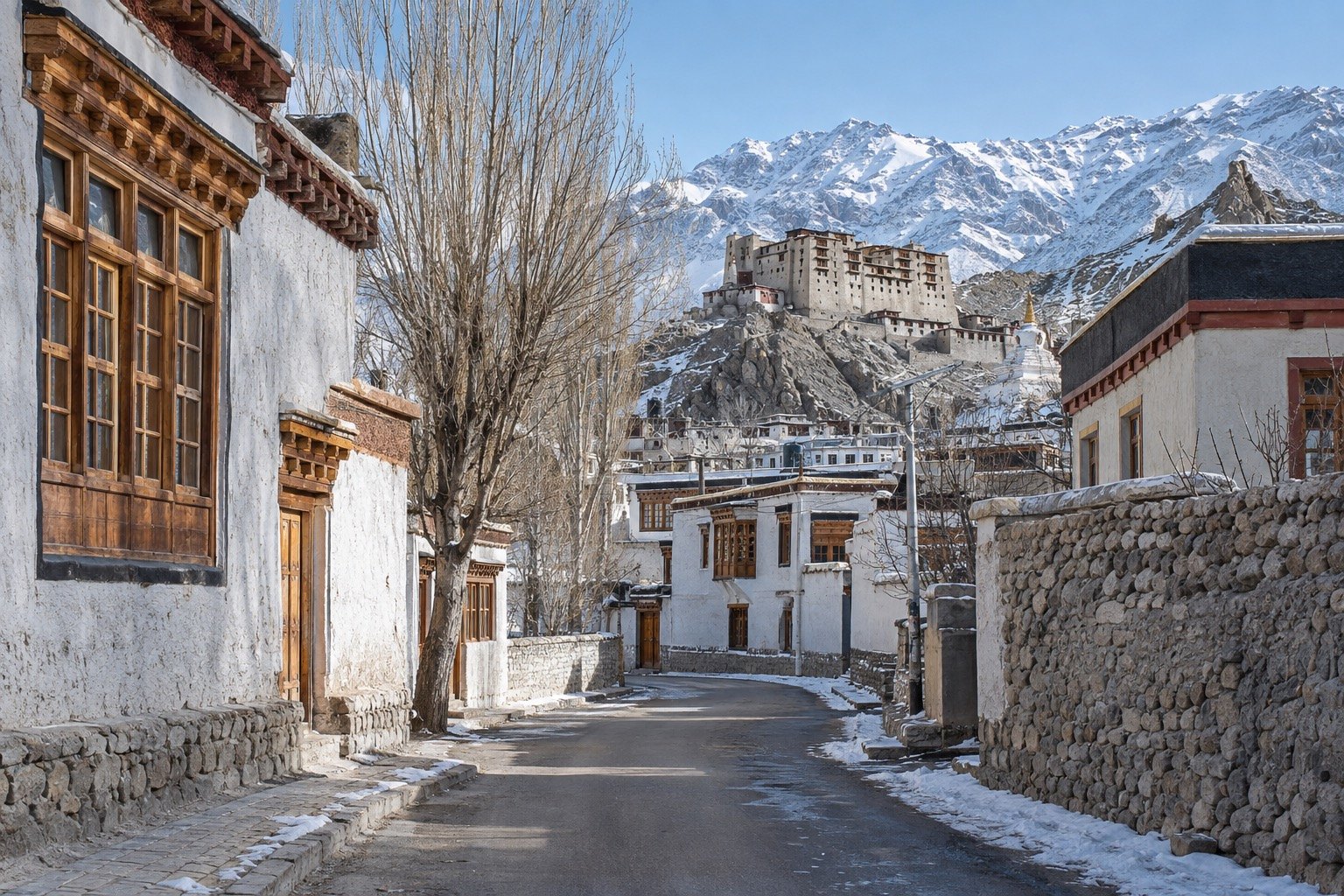
Three Leh groups have announced a boycott of Ladakh's Panchayat and Municipal Council polls, due on 21 November 2026. Kargil called a shutdown for 10 November to press for their postponement. The groups allege irregular delimitation of seats. They also say Ladakh has never voted in winter before, and that the poll notification names no results date.
Syllabus: GS2 · Federalism & Local Government; Prelims · Polity & Governance; GS2 · Constitutional Bodies
Why this matters for UPSC
GS2 polity: Panchayats, Municipalities and the State Election Commission in Union Territories. Prelims can ask what Articles 243K and 243L provide; Mains, how hill councils and Panchayats share local power.
Why it matters
A voter in a Leh village may find that the Panch seat has already been filled without a contest, so the person who will speak for the village was never put to a vote. Boycotts and uncontested seats thin the mandate of the bodies meant to bring government closest to people. Putting the polls off again would keep local decisions with officials, while holding them in the cold may keep elderly voters in remote hamlets away from the booth. How the administration answers the complaints on seat boundaries and timing will decide whether the new councils begin with public trust.
Prelims pointers
- Under Article 243K, the Governor appoints the State Election Commissioner, who can be removed only in the manner and on the grounds that apply to a High Court judge.
- A State Election Commissioner's conditions of service cannot be varied to his disadvantage after his appointment.
- The Governor must, when asked, give the State Election Commission the staff it needs; subject to the Constitution, the State Legislature may legislate on all matters of local-body elections.
- Articles 243L (Panchayats) and 243ZB (Municipalities) are worded alike: in a Union Territory, 'Governor' means the Administrator appointed under Article 239.
- In a Union Territory, references to a State Legislature mean the territory's Legislative Assembly, where it has one.
- The President may, by public notification, apply the Panchayat or Municipal provisions to a Union Territory or part of it with exceptions and modifications.
Practise a UPSC-style question
With reference to the State Election Commission under the Constitution of India, consider the following statements:
1. The State Election Commissioner is appointed by the President of India.
2. The Commission superintends, directs and controls the preparation of electoral rolls for Panchayat elections.
3. The State Election Commissioner is removed in the same manner and on the same grounds as a Judge of a High Court.
Which of the statements given above is/are correct?
- (a) 1 and 2 only
- (b) 2 and 3 only
- (c) 1 and 3 only
- (d) 1, 2 and 3
Show the answer
Answer: (b) 2 and 3 only
Answer: (b) 2 and 3 only. Article 243K gives the Commission charge of Panchayat polls, and the Governor, not the President, appoints its head.
Statement 1: incorrect. Article 243K says the State Election Commissioner is appointed by the Governor of the State.
Statement 2: correct. Article 243K vests the superintendence, direction and control of electoral rolls and of all Panchayat elections in the State Election Commission.
Statement 3: correct. The proviso to Article 243K bars removal of the State Election Commissioner except in like manner and on like grounds as a High Court judge.
Eliminate: statement 1 is wrong, as the Governor makes the appointment. Out: (a), (c), (d).
Trap: Swapped attribution. The appointing authority moves from the Governor to the President; the removal rule borrowed from High Court judges makes a central appointment sound plausible.
Remember: State Election Commissioner: appointed by the Governor, removed only like a High Court judge.