
Coal gasification scheme: two NTPC applications in Round 2, Round 3 opens
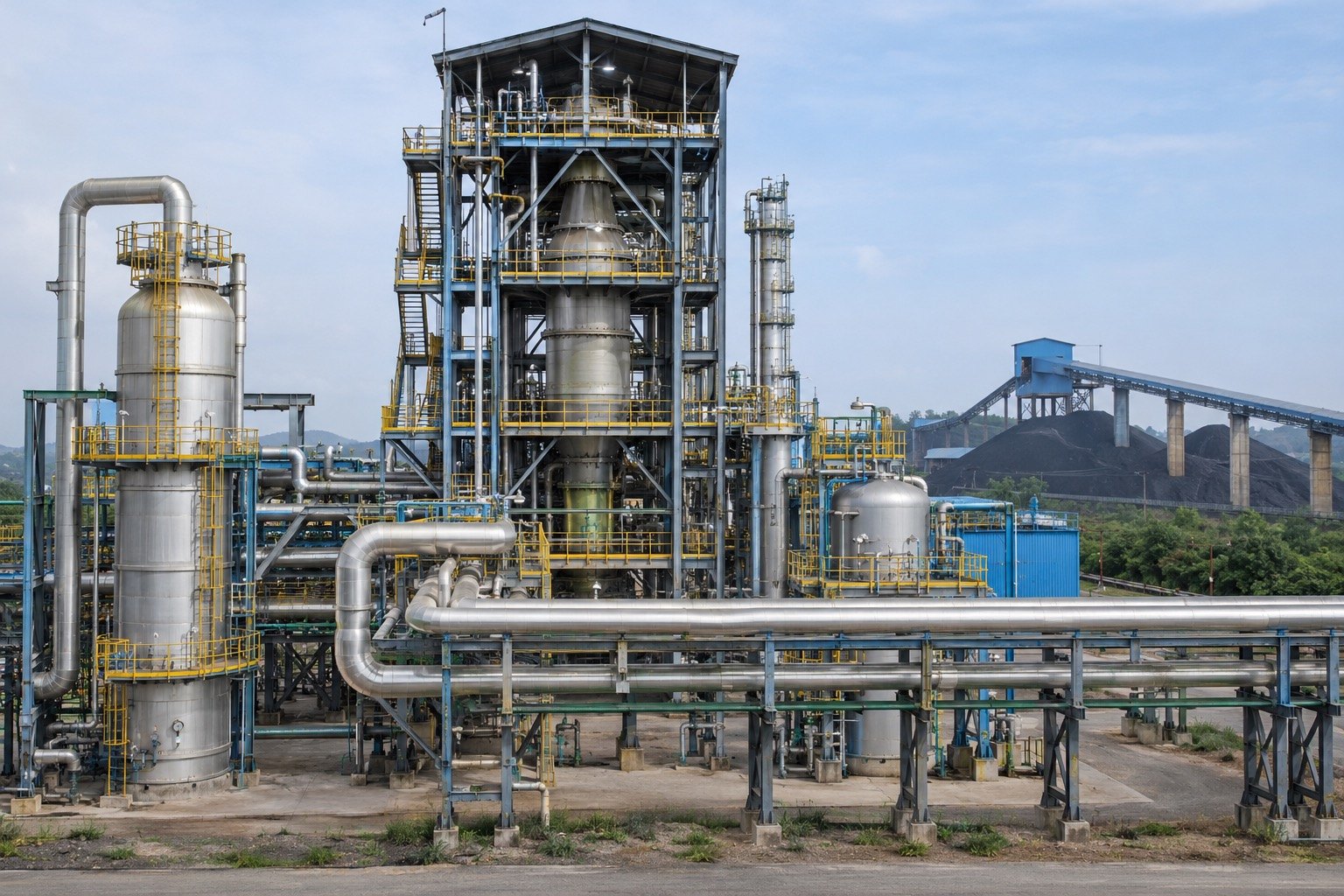
NTPC Limited filed both applications received in Round 2 of the Rs 37,500 crore Scheme for Promotion of Surface Coal/Lignite Gasification Projects, the Ministry of Coal announced on 10 November 2026. One proposes urea; the other, methanol and dimethyl ether (DME). Round 3 opened the same day and takes applications until 11 January 2027. Round 1 had drawn seven applications.
Syllabus: GS3 · Indian Economy & Growth; Prelims · Current Affairs & IR; GS3 · Infrastructure
Why this matters for UPSC
GS3 economy and energy: coal gasification, import substitution and energy security. Prelims can ask the scheme's incentive design and syngas products; Mains, coal's role in cutting imports.
Why it matters
A farmer waiting for urea and a factory buying methanol both depend in part on imports, so their supply moves with world markets and with trouble in West Asia. Plants that turn Indian coal or lignite into these goods could steady that supply and keep more of the spending, jobs and tax revenue at home, in coal-bearing regions. The rounds also test the scheme itself. Each project needs feasibility studies, technology choices, environmental review and financing before a company files. The pace at which companies come forward, and at which bids become working plants, will decide whether the 2030 goal is within reach.
Prelims pointers
- The Rs 8,500 crore scheme of January 2024 paid 15% of capital expenditure; the Rs 37,500 crore scheme of 2026 pays up to 20% of plant and machinery cost.
- The 2026 scheme is technology-agnostic: it prescribes no particular gasification technology, though it encourages indigenous ones.
- Incentives under the 2026 scheme come on top of those under the commercial coal mining regime and other Central or State schemes, without restricting access to them.
- Per the Union Cabinet's May 2026 release, India imports about 100% of its ammonia, 80-90% of its methanol, over 50% of its LNG and about 20% of its urea.
- India holds about 401 billion tonnes of coal and 47 billion tonnes of lignite reserves, and coal meets over 55% of its energy mix (Union Cabinet, 2026).
- Products the 2026 scheme seeks from domestic coal and lignite include syngas, methanol, ammonia, urea and hydrogen (Ministry of Coal, September 2026).
Practise a UPSC-style question
With reference to the Scheme for Promotion of Surface Coal/Lignite Gasification Projects approved in 2026, consider the following statements:
1. It offers an incentive to new gasification projects that produce syngas and its downstream products.
2. It requires projects to use a gasification technology developed within India.
3. It aims to gasify about 75 million tonnes of coal or lignite.
Which of the statements given above is/are correct?
- (a) 1 and 2 only
- (b) 2 and 3 only
- (c) 1 and 3 only
- (d) 1, 2 and 3
Show the answer
Answer: (c) 1 and 3 only
Answer: (c) 1 and 3 only. The scheme backs syngas projects for about 75 MT but leaves the technology open.
Statement 1: correct. The Union Cabinet's May 2026 release says the Rs 37,500 crore outlay incentivises new surface coal/lignite gasification projects for syngas and its downstream products.
Statement 2: incorrect. The scheme is technology-agnostic; it encourages indigenous technologies but does not require them.
Statement 3: correct. The Cabinet release says the scheme targets gasification of approximately 75 million tonnes of coal/lignite.
Eliminate: statement 2 is wrong, because the scheme is technology-agnostic. Out: (a), (b), (d).
Trap: Sounds right. The scheme encourages indigenous technology, and the statement turns that encouragement into a plausible mandate that does not exist.
Remember: The 2026 gasification scheme is technology-agnostic; it encourages, not mandates, indigenous technology.