
Expert Appraisal Committee defers environmental clearance for Ujjain airport upgrade
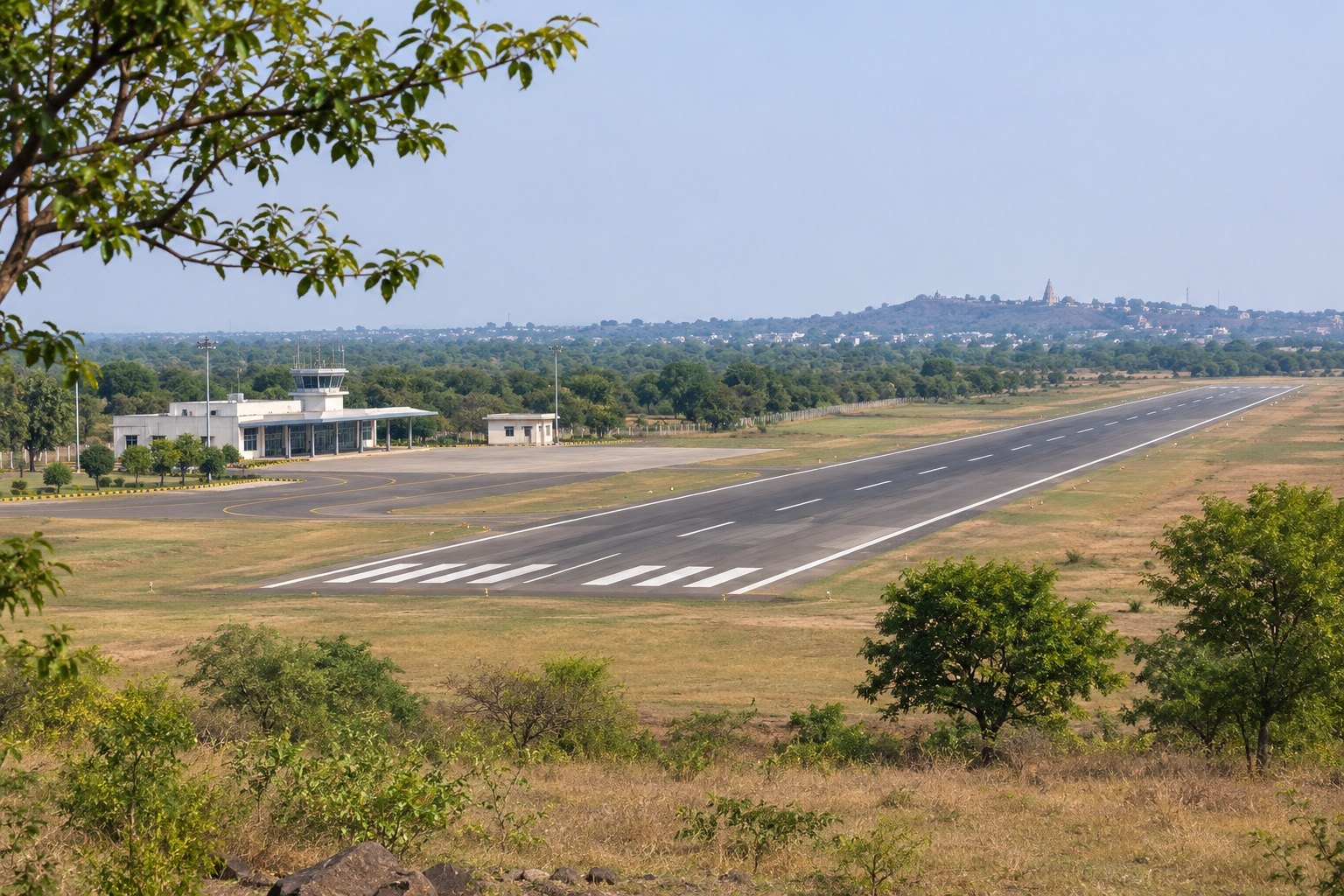
On 30 October 2026, the Union Environment Ministry's Expert Appraisal Committee deferred the Ujjain (Datana) airport upgrade. It withheld its recommendation on environmental clearance without rejecting the proposal. The committee wants a detailed fauna survey and a wildlife conservation plan from the Airports Authority of India. It found replies to public-hearing concerns inadequate.
Syllabus: Prelims · Environment & Ecology; GS3 · Infrastructure; GS3 · Environment & Conservation
Why this matters for UPSC
GS3 environment: the EIA Notification, 2006 and environmental clearance. Prelims can ask the four stages, the categories and who appraises; Mains, the quality of EIA reports and public hearings.
Why it matters
A farmer whose land is likely to be acquired for the Datana airport gets a second chance to be heard. The committee will not move until the airport's planners answer the questions raised at the hearing. Those covered payment for land, a road to the site and a path to the fields, and each promise now needs money and a date. Construction cannot begin before clearance, so the extra studies take time ahead of the 2028 Simhastha Kumbh. The blackbuck sighting shows why an EIA report must rest on careful field data: a study that misses a protected animal can mislead the very committee that relies on it.
Prelims pointers
- The EIA Notification, 2006 was issued by the Ministry of Environment and Forests under the Environment (Protection) Act, 1986, replacing the earlier 1994 notification.
- Category A projects are cleared by the Central Government in the Environment Ministry; Category B projects by the State Environment Impact Assessment Authority (SEIAA).
- Where no SEIAA or State Expert Appraisal Committee (SEAC) has been set up, a Category B project is handled as a Category A project.
- Screening applies to Category B alone and sorts projects into B1, which need an EIA report, and B2, which do not.
- If the ToR are not conveyed within sixty days of the application form, the ToR the applicant proposed are deemed final.
- The State Pollution Control Board holds the public hearing at or near the site; defence and strategic projects and Category B2 projects skip public consultation.
- Appraisal must end within sixty days of the committee receiving the final EIA report and other documents.
- The Ministry of Civil Aviation's 2008 guidelines bar a greenfield airport within 150 km aerial distance of an existing civilian airport; closer cases are decided individually.
Practise a UPSC-style question
With reference to the stages of prior environmental clearance under the EIA Notification, 2006, consider the following statements:
1. Screening is carried out for both Category A and Category B projects.
2. Scoping is the stage at which the appraisal committee fixes the Terms of Reference for the EIA report.
3. The public hearing is conducted by the State Pollution Control Board at or near the project site.
Which of the statements given above is/are correct?
- (a) 1 and 2 only
- (b) 2 and 3 only
- (c) 1 and 3 only
- (d) 1, 2 and 3
Show the answer
Answer: (b) 2 and 3 only
Answer: (b) 2 and 3 only. Screening is meant for Category B alone; the other two statements describe the stages correctly.
Statement 1: incorrect. Under the EIA Notification, 2006, screening applies only to Category B projects, which it sorts into B1 and B2.
Statement 2: correct. At scoping, the Expert Appraisal Committee or the State committee fixes the Terms of Reference that the EIA study must cover.
Statement 3: correct. The State Pollution Control Board, or a Union territory Pollution Control Committee, holds the hearing at or close to the site.
Eliminate: Statement 1 is the surest; screening is for Category B projects alone, which removes every option that includes 1. Out: (a), (c), (d).
Trap: Wrong scope. Statement 1 widens a Category B step to Category A projects; scoping, public consultation and appraisal apply to Category A, but screening does not.
Remember: Four stages in order: screening (Category B only), scoping, public consultation, appraisal.