
Environment Ministry drops Karnataka's Banduri Nala proposal from PARIVESH pending list
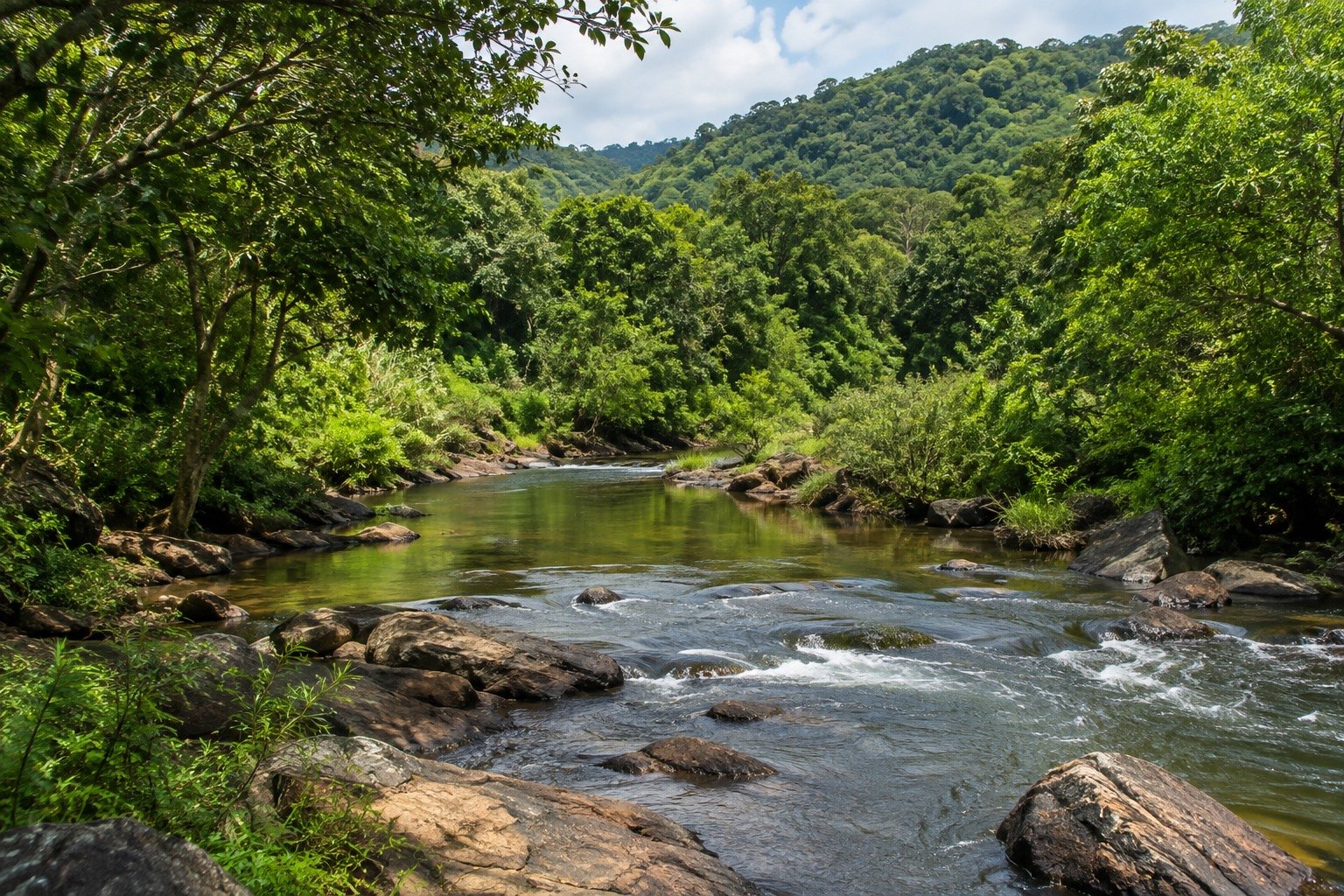
The Union Ministry of Environment, Forest and Climate Change has taken Karnataka's Banduri Nala diversion project in the Mahadayi river basin off the pending list on its PARIVESH portal. The proposal sought 71 acres of forest land. Ministry officials indicated that a final decision awaits the Supreme Court's ruling in the inter-State dispute.
Syllabus: GS2 · Federalism & Local Government; GS2 · Separation of Powers; Prelims · Environment & Ecology
Why this matters for UPSC
GS2 federalism and GS3 environment: Article 262 and water tribunals. Prelims can ask about the Mahadayi tribunal's parties; Mains, drinking water against forest ecology.
Why it matters
A family in Hubballi-Dharwad or Gadag waiting for piped water from the Mahadayi will wait longer. Karnataka planned the Banduri Nala work for drinking water, and the works on forest land need the Centre's clearance. With the proposal off the pending list and officials tying any decision to the Supreme Court, the project now depends on the court case as much as on paperwork. Goa's Water Resources Development Minister says the step strengthens Goa's case in the Supreme Court. The episode shows how a river dispute between States can freeze ordinary infrastructure for years.
Prelims pointers
- Article 262 gives the power to Parliament, not State legislatures; its law may also bar the Supreme Court and other courts from a river water dispute.
- The Mahadayi Water Disputes Tribunal was formed in November 2010, though its constitution is reckoned from August 2013.
- A water tribunal sends its report and decision to the Central Government, not to the Supreme Court.
- A water tribunal's award is published by the Central Government, not the tribunal, in the Gazette of India.
- After a tribunal reports, the party States and the Centre may file further references, and the tribunal then gives a further report.
- Kalasa Nala and Banduri Nala are separate Karnataka diversion works in the Mahadayi basin; Karnataka's forest officials say Banduri Nala submerges less forest land.
Practise a UPSC-style question
With reference to Article 262 of the Constitution of India, consider the following statements:
1. It lets State legislatures provide by law for adjudicating disputes over the waters of inter-State rivers.
2. It allows Parliament, by law, to bar the Supreme Court and other courts from hearing such water disputes.
Which of the statements given above is/are correct?
- (a) 1 only
- (b) 2 only
- (c) Both 1 and 2
- (d) Neither 1 nor 2
Show the answer
Answer: (b) 2 only
Answer: (b) 2 only. Article 262 gives the power to Parliament, which may also shut out the courts.
Statement 1: incorrect. Article 262(1) says Parliament, not the State legislatures, may by law provide for adjudicating inter-State river water disputes.
Statement 2: correct. Article 262(2) lets Parliament by law provide that neither the Supreme Court nor any other court will hear such a dispute.
Eliminate: statement 2 matches Article 262(2), so options without 2 go. Out: (a), (d).
Eliminate: statement 1 names State legislatures instead of Parliament. Out: (c).
Trap: Swapped attribution. Water is a subject States care about, so a student may credit the power to State legislatures instead of Parliament.
Remember: Article 262 = Parliament's law on inter-State river disputes, with power to bar courts.
More from the 14 November 2026 edition
- Centre declares IRF unlawful for five more years under UAPA; Tribunal next Polity
- Minibus and container truck collide near Kaziranga in Assam's Golaghat National
- MoSPI committee proposes thematic accounts to measure the knowledge economy Economy
- CCPA fines Ola Rs 10 lakh, bars pre-ride tip prompts Polity
- NIA takes over two terror cases from Punjab, U.P. under NIA Act National
- Centre asks Maharashtra to probe cost basis of Tarali project's wildlife deposit Environment