
Villages without 4G fall from 45,180 to 11,372, DoT figures show
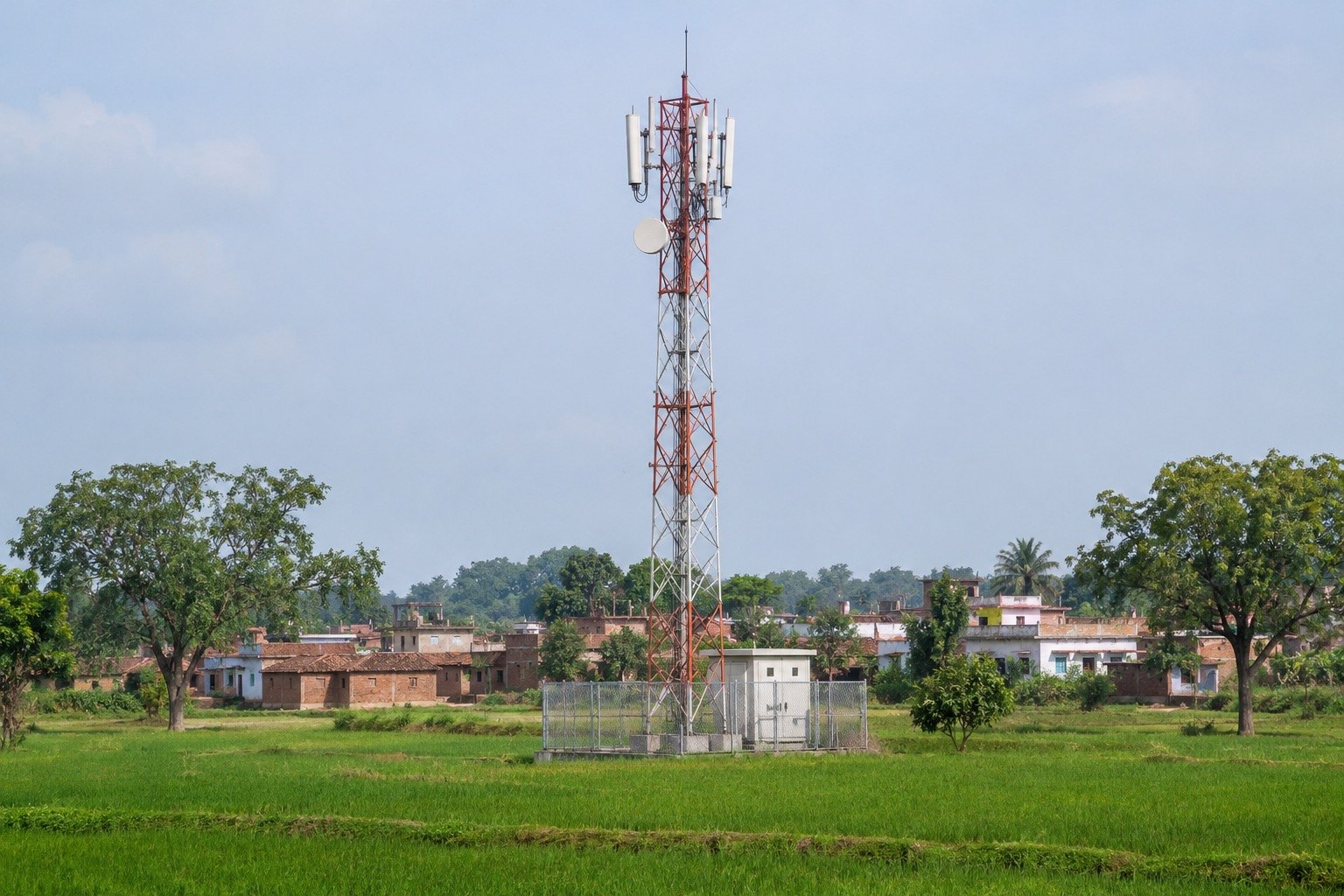
Villages without 4G coverage fell from 45,180 in 2022 to 11,372, Department of Telecommunications (DoT) data obtained under the Right to Information Act, 2005 show. The drop is larger than the 24,680 uncovered villages targeted by BSNL's 4G saturation project. That project, approved in July 2022, is funded through the Universal Service Obligation Fund.
Syllabus: GS3 · Infrastructure; GS2 · Government Policies; GS3 · Indian Achievements in S&T
Why this matters for UPSC
GS3 infrastructure and GS2 government schemes: the Digital Bharat Nidhi and the 4G saturation project. Prelims can ask the Telecommunications Act, 2023 fund rules; Mains, the rural digital divide.
Why it matters
A farmer or a student in a remote village without 4G cannot use a banking app, join an online class or consult a doctor by video. The Cabinet's 2022 decision named e-governance, banking, telemedicine and tele-education as the services mobile broadband would carry to such villages. Mobile broadband is the main way Indians reach the internet, and smartphone ownership is still far from universal, so each newly covered village gains a route to these services that it did not have. The villages still left out are the hardest test: they show whether public money can carry a network to places where operators see no business case, and keep it running once it is built.
Prelims pointers
- The Telecommunications Act, 2023 comes into force on dates the Central Government notifies, and different provisions may begin on different dates.
- The Telecommunications Act, 2023 extends to the whole of India and to offences committed outside India by any person, as the Act provides.
- The Digital Bharat Nidhi's balance does not lapse at the end of a financial year.
- Amounts owed towards the Universal Service Obligation under licences granted before the appointed day are treated as owed to the Digital Bharat Nidhi.
- BharatNet is a rural broadband programme to connect all Gram Panchayats and villages by fibre, satellite and wireless; the Digital Bharat Nidhi is a fund that pays for universal service.
- A separate project approved in 2021 was to bring 4G to 7,287 uncovered villages in 44 aspirational districts across five States, before the 2022 nationwide saturation project.
- BSNL's indigenous 4G stack is cloud-based and upgradable to 5G, according to the Ministry of Communications (September 2025).
Practise a UPSC-style question
With reference to the Digital Bharat Nidhi, consider the following statements:
1. The Digital Bharat Nidhi is placed under the control of the Telecom Regulatory Authority of India.
2. The Telecommunications Act, 2023 turned the Universal Service Obligation Fund into the Digital Bharat Nidhi.
3. The balance to the credit of the Digital Bharat Nidhi does not lapse at the end of the financial year.
Which of the statements given above is/are correct?
- (a) 1 and 2 only
- (b) 2 and 3 only
- (c) 1 and 3 only
- (d) 1, 2 and 3
Show the answer
Answer: (b) 2 and 3 only
Answer: (b) 2 and 3 only. The fund was renamed by the 2023 Act and keeps its balance, but the Central Government controls it.
Statement 1: incorrect. The Act places the Digital Bharat Nidhi under the control of the Central Government, to be administered in the manner prescribed by rules.
Statement 2: correct. The Telecommunications Act, 2023 provides that the Universal Service Obligation Fund created under the Indian Telegraph Act, 1885 shall be the Digital Bharat Nidhi.
Statement 3: correct. The Telecommunications Act, 2023 says the balance to the credit of the Digital Bharat Nidhi shall not lapse at the end of the financial year.
Eliminate: statement 1 is wrong, as the Act names the Central Government. Out: (a), (c), (d).
Trap: Swapped attribution. The question pins the fund on the telecom regulator, a familiar body, when the Act keeps it with the Central Government.
Remember: Digital Bharat Nidhi = old USOF, Central Government control, non-lapsing balance.
More from the 10 November 2026 edition
- Forest Advisory Committee recommends Panari pumped storage project in tiger corridor Environment
- Kerala samples petrol after Karnataka claims excess ethanol in E20 fuel Economy
- COP31 opens in Antalya; WMO puts 2026 among four warmest years Environment
- FSSAI festive-season drive: 52 food licences cancelled, 1,133 suspended National