
IBBI lets creditors recommend keeping real estate projects out of insolvency
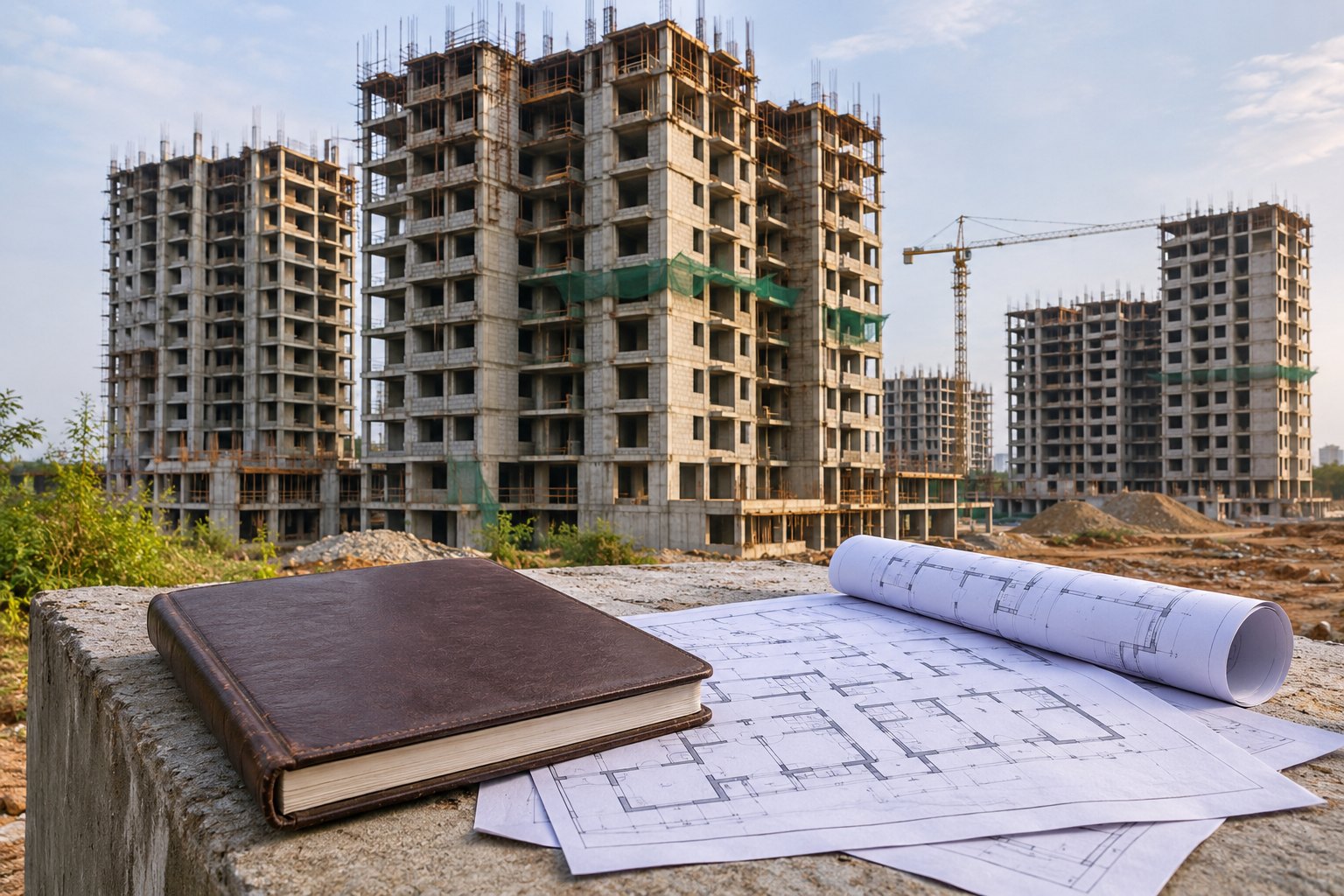
The Insolvency and Bankruptcy Board of India (IBBI) amended its insolvency regulations on 30 October 2026, effective at once. Where a developer under insolvency has several real estate projects, the Committee of Creditors may, by at least 66 per cent of voting share, recommend excluding a project from the process. The Adjudicating Authority then considers the application.
Syllabus: GS3 · Indian Economy & Growth; GS2 · Statutory & Regulatory Bodies; GS2 · Government Policies
Why this matters for UPSC
GS3 economy: the Insolvency and Bankruptcy Code, 2016 and real estate regulation. Prelims can ask about allottees as financial creditors and the IBBI; Mains, project-wise resolution.
Why it matters
A family that has already moved into a finished flat can be stuck for years because the builder's other, unfinished sites went bad. The company is treated as one debtor, so the finished tower waits with everything else, and handing over keys or registering the sale needs the creditors' nod each time. Separating sound projects from troubled ones lets lenders and buyers spend their time where rescue is needed. Bidders get a costed picture of what is left to build, and buyers still waiting get a project-wise delivery schedule that is reported to a monitoring committee. The larger issue is whether a law built for companies can protect ordinary buyers whose savings sit in bricks.
Prelims pointers
- The IBC names the National Company Law Tribunal, constituted under the Companies Act, 2013, as the Adjudicating Authority for insolvency of corporate persons.
- The IBC deems an amount raised from an allottee under a real estate project to have the commercial effect of a borrowing.
- Allottees must file for insolvency jointly: at least 100 allottees of the same project or 10 per cent of them, whichever is less.
- A financial creditor, an operational creditor or the corporate debtor itself may start the corporate insolvency process once a default occurs.
- The Central Government may raise the minimum default for the IBC's corporate insolvency part by notification, but to no more than one crore rupees.
- Under RERA, 2016, a promoter may not advertise, book or sell units in a real estate project before registering it with the Real Estate Regulatory Authority.
- The IBC takes the meanings of "allottee" and "real estate project" from the Real Estate (Regulation and Development) Act, 2016.
Practise a UPSC-style question
With reference to homebuyers under the Insolvency and Bankruptcy Code, 2016, consider the following statements:
1. An amount raised from an allottee under a real estate project is deemed to have the commercial effect of a borrowing.
2. The Code takes the meanings of "allottee" and "real estate project" from the Companies Act, 2013.
3. Allottees of one project may jointly start insolvency if they number at least 100 or 10 per cent of its allottees, whichever is less.
Which of the statements given above is/are correct?
- (a) 1 and 2 only
- (b) 2 and 3 only
- (c) 1 and 3 only
- (d) 1, 2 and 3
Show the answer
Answer: (c) 1 and 3 only
Answer: (c) 1 and 3 only. The Code treats homebuyers' money as financial debt and sets a joint filing threshold for them.
Statement 1: correct. The IBC, 2016 deems money raised from an allottee to have the commercial effect of a borrowing, so it is a financial debt.
Statement 2: incorrect. The IBC borrows both terms from the Real Estate (Regulation and Development) Act, 2016, not the Companies Act, 2013.
Statement 3: correct. The IBC (Amendment) Act, 2020 requires at least 100 allottees of the same project or 10 per cent of them, whichever is less.
Eliminate: statement 2 swaps RERA, 2016 for the Companies Act, 2013, so any option with 2 goes. Out: (a), (b), (d).
Trap: Swapped attribution. The Companies Act, 2013 also appears in the IBC (it constitutes the NCLT), so it sounds like the source of the definitions.
Remember: the IBC takes "allottee" and "real estate project" from RERA, 2016.
More from the 3 November 2026 edition
- TRAI amends telecom complaint redressal rules: 24x7 help, 15-day appeals Polity
- Centre notifies time-bound grievance redressal Rules for VB-G RAM G jobs scheme National
- DGCA, UCADA make two pilots mandatory on Char Dham helicopter charters National
- Errors found in Bengaluru's final electoral roll after Special Intensive Revision Polity
- CBI secures Mahadev app promoter's extradition from Oman after Red Notice Polity